How to Compare XJD Kids Bike Helmet Sizes After Measuring
A kids bike helmet should be selected from a current head measurement, not the child’s age or a guess based on the previous helmet. XJD listings use centimeter and inch ranges, so one careful measurement can narrow the options before color or accessory choices enter the decision.
The standard XJD Kids Bike Helmet currently lists S at 46–51 cm and M at 52–56 cm. The XJD Kids Bike Helmet Protective Gear Set lists M at 52–56 cm and L at 55–58 cm. The XJD White Astronaut Kids Bike Helmet lists S at 46–51 cm and M at 52–56 cm. Confirm the exact live size selector because availability can change.
Measure the head in centimeters
- Use a flexible tape that lies flat without stretching.
- Place it around the widest part of the head, usually just above the eyebrows and ears.
- Keep the tape level around the back of the head.
- Record the measurement to the nearest practical centimeter.
- Measure again to confirm the result.
If the reading sits outside a listed range or directly between two options, do not force a choice from the chart. Check the product instructions and ask support about the exact model. Head shape and adjustment systems can make two helmets with similar labels feel different.
Use the size range as a preselection
A listed range identifies which helmet to try; it does not prove final fit. For example, a 53 cm measurement falls inside several current M ranges. The next step is to place the helmet level on the child’s head and use only the permitted adjustment method.
Do not choose a larger shell just for growth. A helmet that shifts over the eyes or rocks from side to side is not improved by the promise that the child may grow into it.
Check the position before the straps
Place the helmet level so it covers the forehead rather than tilting back. The front edge should sit in the position specified by the manufacturer. Adjust the internal fit system until the helmet feels secure and even, without painful pressure points.
Ask the child to shake their head gently before fastening the chin strap. The helmet should remain stable. If the shell moves freely, revisit the size and adjustment rather than tightening only the strap.
Set the side straps and buckle
Follow the product instructions so the side straps meet around the ears without covering them. Fasten the buckle flat under the chin and remove excessive slack while preserving comfortable breathing and jaw movement. Make sure hair, hats and bulky accessories do not interfere with the fit unless the helmet instructions specifically permit them.
Compare the three XJD directions
The standard helmet provides several listed color choices alongside S and M sizes. The protective gear set adds coordinated equipment and extends the current comparison into an L range. The astronaut design offers a distinct white style in S and M. Style can help a child enjoy wearing the helmet, but the measured and tested fit remains the deciding factor.
Protective gear should also be selected and adjusted for the intended activity. A set does not make an incorrectly fitted helmet acceptable, and no accessory removes the need for supervision and a suitable riding area.
Recheck before every ride
- Inspect the shell, liner, straps and buckle for damage.
- Confirm the helmet still sits level and stable.
- Recheck after a growth spurt, haircut or adjustment change.
- Replace a helmet after a significant impact or when required by its instructions.
Measurement narrows the XJD helmet choice; a level, stable on-head check completes it. Record the child’s current number and verify the selected product range each time a replacement is needed.
Recommended products
-
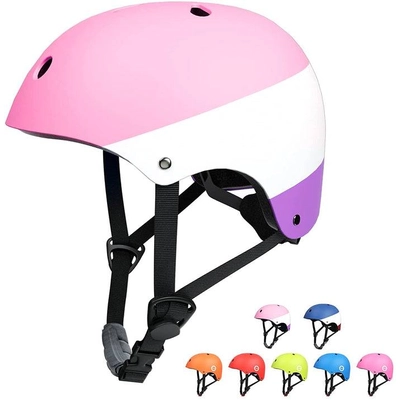
XJD Kids Bike Helmets
XJD Kids Bike Helmets makes helmet selection clearer: measure first, then choose…
Bike Helmets Out of stock Pink White / L:21.65"-22.83" / 55-58 cm -
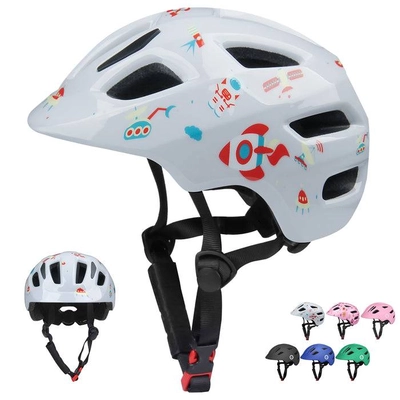
XJD White Astronaut Kids' Bike Helmet
4 reviews
XJD White Astronaut Kids' Bike Helmet makes helmet selection clearer: measu…
Bike Helmets Out of stock M:20.47"-22.05" / 52-56 cm -
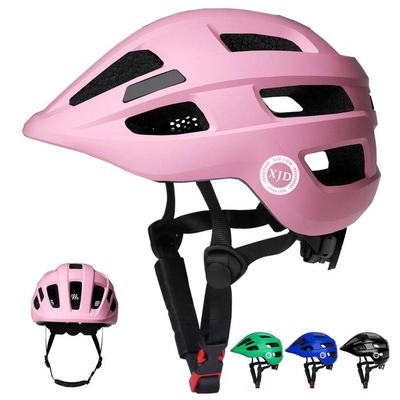
XJD Kids Bike Helmet
XJD Kids Bike Helmet makes helmet selection clearer: measure first, then choose …
Bike Helmets Blue / S:18.11"-20.08" / 46-51 cm -
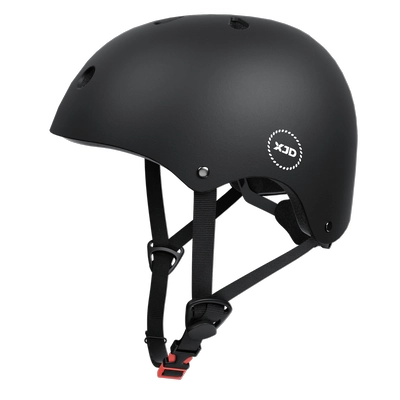
XJD Kids Bike Helmet Protective Gear Set
XJD Kids Bike Helmet Protective Gear Set makes helmet selection clearer: measure…
Bike Helmets Blue / L:21.65"-22.83" / 55-58 cm