

14 Inch Bikes Height and Age Guide: Measure Before You Buy
A 14-inch bike is a starting match for ages 3–6 and heights 37–45 in (94–114 cm), but measure the child and check the actual fit before buying.
Measure height and inseam first
Measure the rider without shoes, standing straight against a wall. Mark the top of the head and measure from the floor to that mark. Compare this height with the XJD Bikes starting range for a 14-inch bike: 37–45 in (94–114 cm).
Next, measure inseam. Have the child stand with feet slightly apart and place a firm, level object between the legs to represent the bike seat. Measure from the floor to the top of that object. This measurement helps you judge stand-over room and whether the child can get on, stop and step down comfortably.
Age is only a rough filter. A child within the 3–6 starting range may still need another size because of height, leg length, reach, hand control or confidence.
Compare the 14-inch range with nearby sizes
| Wheel size | Starting age | Starting rider height |
|---|---|---|
| 12 Inch | 3–4 | 34–40 in / 86–102 cm |
| 14 Inch | 3–6 | 37–45 in / 94–114 cm |
| 16 Inch | 4–7 | 40–48 in / 102–122 cm |
The ranges overlap intentionally: wheel size cannot determine fit by itself. Start with measured height, then use the inseam and an in-person fit check to decide between overlapping sizes. Do not move up merely because the child is close to the top of an age range or because a larger bicycle might last longer.
Perform the fit check on the exact bike
Have the child try the fully and correctly assembled bicycle with close adult supervision. If assembly, adjustment or torque instructions are unclear, follow the exact product manual or ask a qualified bicycle mechanic.
- Check stand-over: The child should be able to straddle the bicycle and manage it without the frame preventing a controlled stop or step-down.
- Check the riding position: From the seat, the child should look balanced rather than stretched toward the handlebar or crowded over it.
- Check steering: Ask the rider to turn the handlebar both ways while remaining in control. Their knees, arms and body position should not make steering awkward.
- Check brake reach: The child must be able to reach and operate the bike’s braking controls as directed for that exact model. Do not assume hand size or strength from age.
- Check confidence: Ask the child to start, steer, stop and step down in a controlled practice area. Hesitation caused by the bike feeling tall, heavy to manage or difficult to reach is relevant fit evidence.
When a 14-inch bike is not the right choice
Do not choose a 14-inch bike solely because the child is aged 3–6. It may be unsuitable if the rider falls outside the 37–45 in (94–114 cm) starting range, cannot stand over and control the bicycle, cannot comfortably reach the handlebar or braking controls, or loses confidence during starts and stops.
A rider in an overlapping height range still needs comparison testing. For example, 40 in falls within the listed starting ranges for 12-, 14- and 16-inch bikes. That does not make those sizes equivalent. Body proportions, reach, control and current ability should settle the decision. Avoid an oversized bike bought for future growth.
How the supplied XJD options help
XJD Kids Bike Blue and XJD Kids Bike Purple are both cataloged as Training Wheel Bikes and each offers 12 Inch, 14 Inch, 16 Inch and 20 Inch SKU labels. Their 14 Inch options are directly relevant, while the 12 Inch and 16 Inch labels make the neighboring-size comparison practical. Color does not establish fit, so apply the same measurement and control checks to either product.
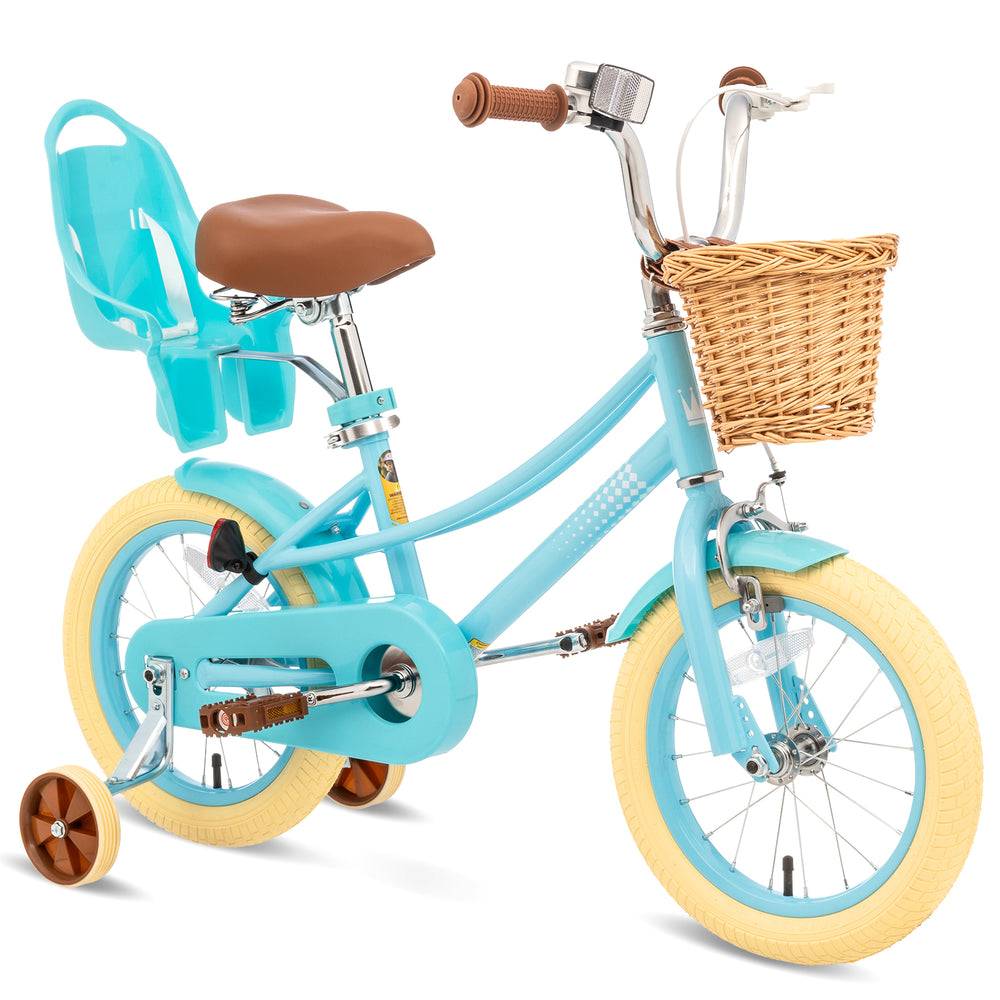 XJD Kids Bike Blue
 is a Training Wheel Bike with 12 Inch, 14 Inch, 16 Inch and 20 Inch SKU labels, making its 14 Inch option relevant and its neighboring sizes useful for comparison after measuring.
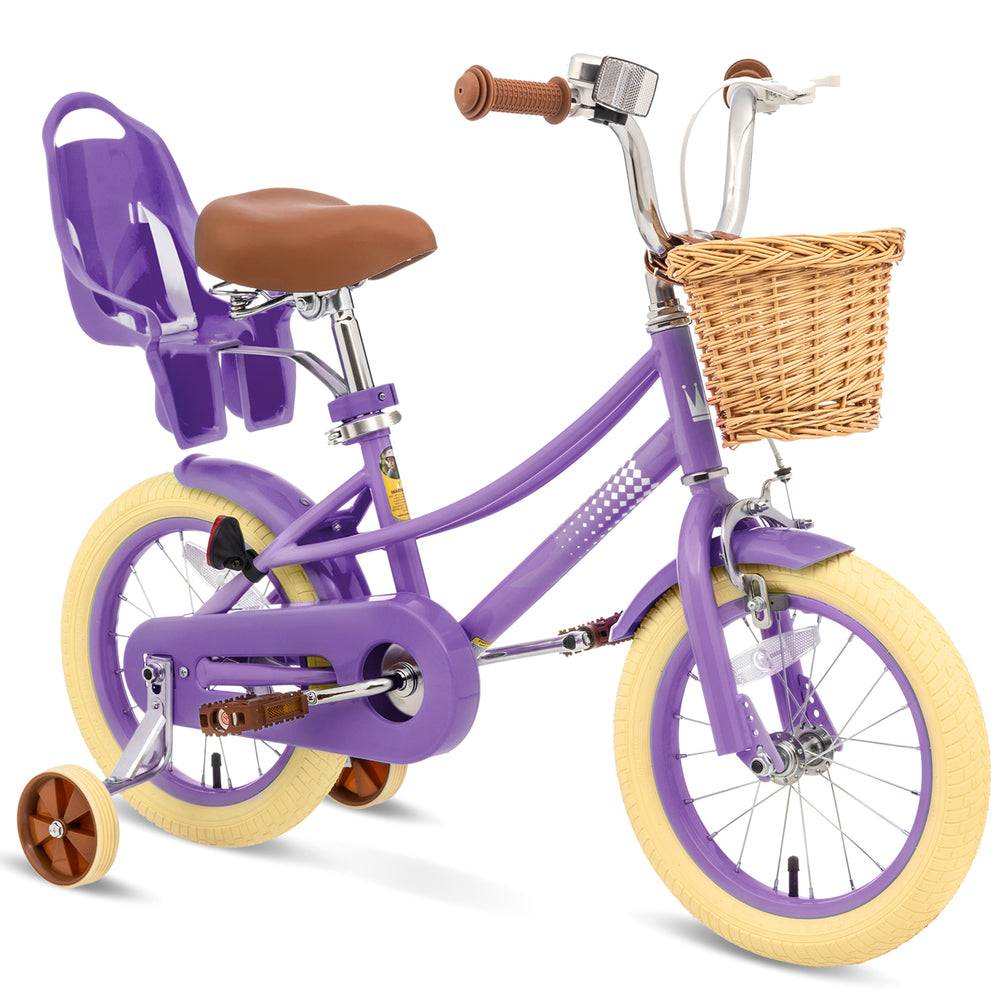 XJD Kids Bike Purple
 is a Training Wheel Bike offered with 12 Inch, 14 Inch, 16 Inch and 20 Inch SKU labels. Its 14 Inch option still requires individual height, inseam, reach, control and confidence checks.
Complete the safety check before riding
After choosing the size, use a bicycle helmet that fits properly, sits level and has its straps adjusted according to the helmet manufacturer’s instructions. A helmet does not correct a poorly fitting bicycle.
Confirm that the exact bicycle has been assembled and adjusted according to its product manual. For maintenance, compatibility, load limits or torque information, use that manual or consult a qualified bicycle mechanic rather than applying a generic value.
Make the 14-inch decision
Choose the 14-inch option only when the child’s measured height supports the 37–45 in (94–114 cm) starting range and the exact bike passes the inseam, stand-over, reach, brake-control and confidence checks. If any of those checks fail, compare the appropriate neighboring size instead of buying for age or future growth.
Bikes for your next adventure
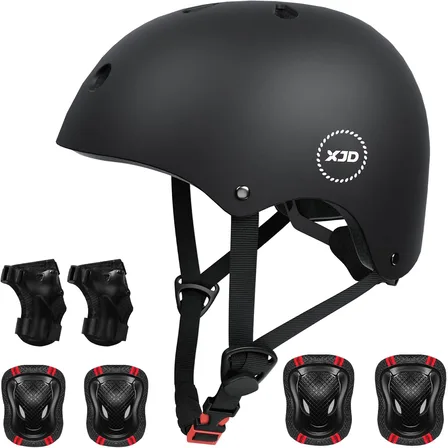
XJD Kids Bike Helmet & Protective Gear Set – Black
10 reviews
XJD Kids Bike Helmet & Protective Gear Set – Black makes helmet selection cl…$23.79
$27.99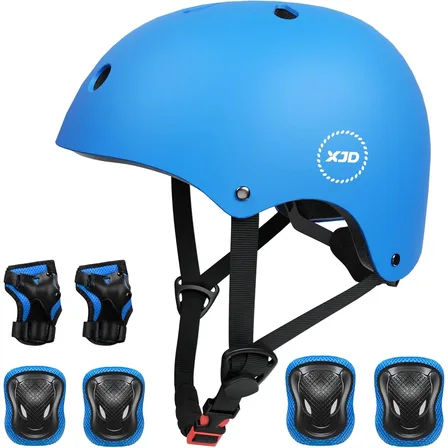
XJD Kids Bike Helmet & Protective Gear Set – Blue
10 reviews
XJD Kids Bike Helmet & Protective Gear Set – Blue makes helmet selection cle…$23.79
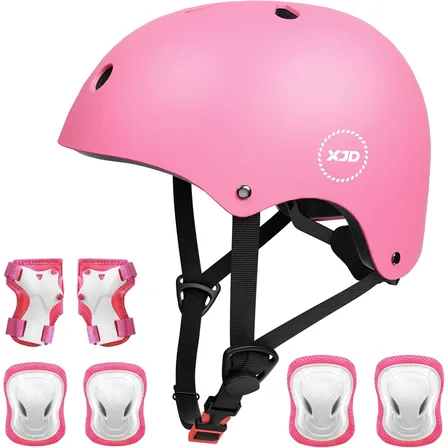
XJD Kids Bike Helmet & Protective Gear Set – Pink
XJD Kids Bike Helmet & Protective Gear Set – Pink makes helmet selection cle…$24.64