24 Inch Bikes Height and Age Guide: Measure Before You Buy
A 24-inch bike is XJD’s starting point for riders ages 10–14 and 54–64 inches (137–163 cm) tall, but height alone does not confirm fit. Measure the child’s height and inseam, then check stand-over clearance, reach, brake control, and confidence on the exact bicycle before buying.
Who should consider a 24-inch bike?
Use the wheel-size figures as screening ranges, not guarantees. Age can help you begin the search, but a measured rider height is more useful because children of the same age may have very different proportions and riding ability.
| Wheel size | XJD age starting point | XJD rider-height starting point |
|---|---|---|
| 20 Inch | Ages 7–12 | 48–60 in / 122–152 cm |
| 24 Inch | Ages 10–14 | 54–64 in / 137–163 cm |
| 26 Inch | Youth and adults | Over 60 in / 153 cm |
The ranges overlap, so a rider near 60 inches should not be assigned a wheel size from height alone. Compare the actual 24-inch bicycle with any adjacent size being considered and choose the one the child can control now.
Measure height and inseam correctly
- Height: Have the child stand without shoes, back straight and heels against a wall. Mark the top of the head and measure from the floor.
- Inseam: With feet slightly apart, place a firm, thin book between the legs and raise it gently to simulate a saddle. Measure from the floor to the book’s top edge.
- Record both measurements: Keep the values in inches or centimeters so you can compare them with the manufacturer’s information for the exact model.
The supplied standard gives a rider-height range but no numerical inseam requirement. Do not invent one or assume that every 24-inch frame has identical geometry. Compare the measured inseam with the exact product manual, then confirm fit by having the child try the bicycle.
Perform the fit check on the actual bike
Following the American Academy of Pediatrics guidance summarized for this guide, do not buy an oversized bicycle merely to leave growing room. During a supervised try-on, check these points:
- Stand-over: The child can straddle the bicycle comfortably rather than being forced onto tiptoes or against the frame.
- Starting and stopping: The rider can mount, set off, stop, and dismount without the bicycle overwhelming them.
- Reach: The child can hold the controls without an extreme stretch, locked arms, or an unstable posture.
- Brake control: The rider can reach and operate the brake controls reliably while maintaining steering control.
- Confidence: The child looks and feels composed at low speed, while turning, and during stops.
If any check fails, adjustment may or may not solve it. Consult the exact product manual or a qualified bicycle mechanic; do not select a larger size on the assumption that the rider will soon adapt.
How the supplied XJD options help
The two supplied Beach Cruiser Bikes are relevant because their catalog selections let a parent compare 20-, 24-, and 26-inch labels around the target size. They help identify a 24-inch catalog option and adjacent-size comparison points, but their listed wheel sizes do not replace an individual fit check.
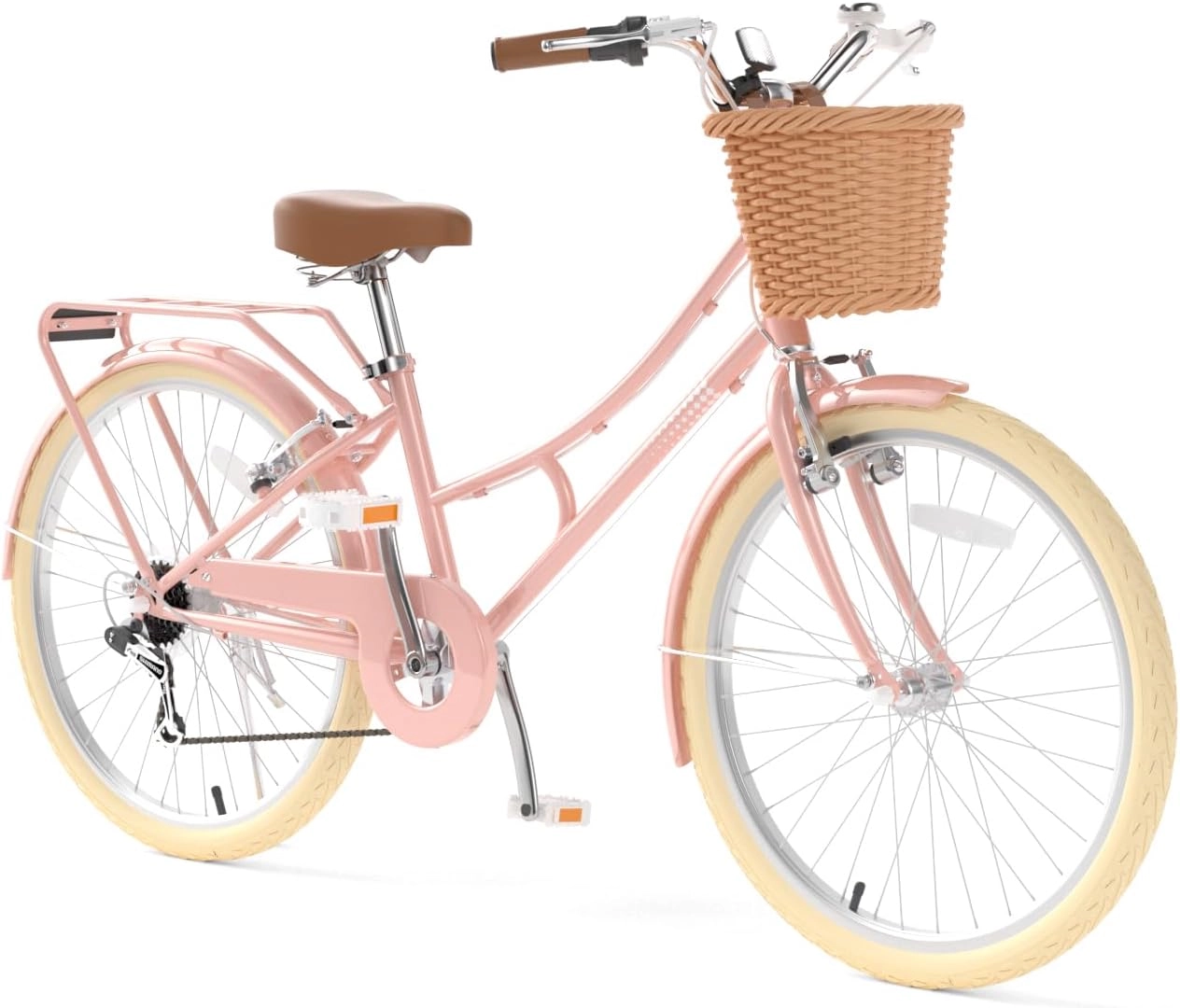 XJD Beach Cruiser Bike with Rear Rack & V-Brake – Pink
Lists 20 Inch, 24 Inch, and 26 Inch SKU labels, making its 24 Inch selection directly relevant and its other sizes useful only as separate comparison points.
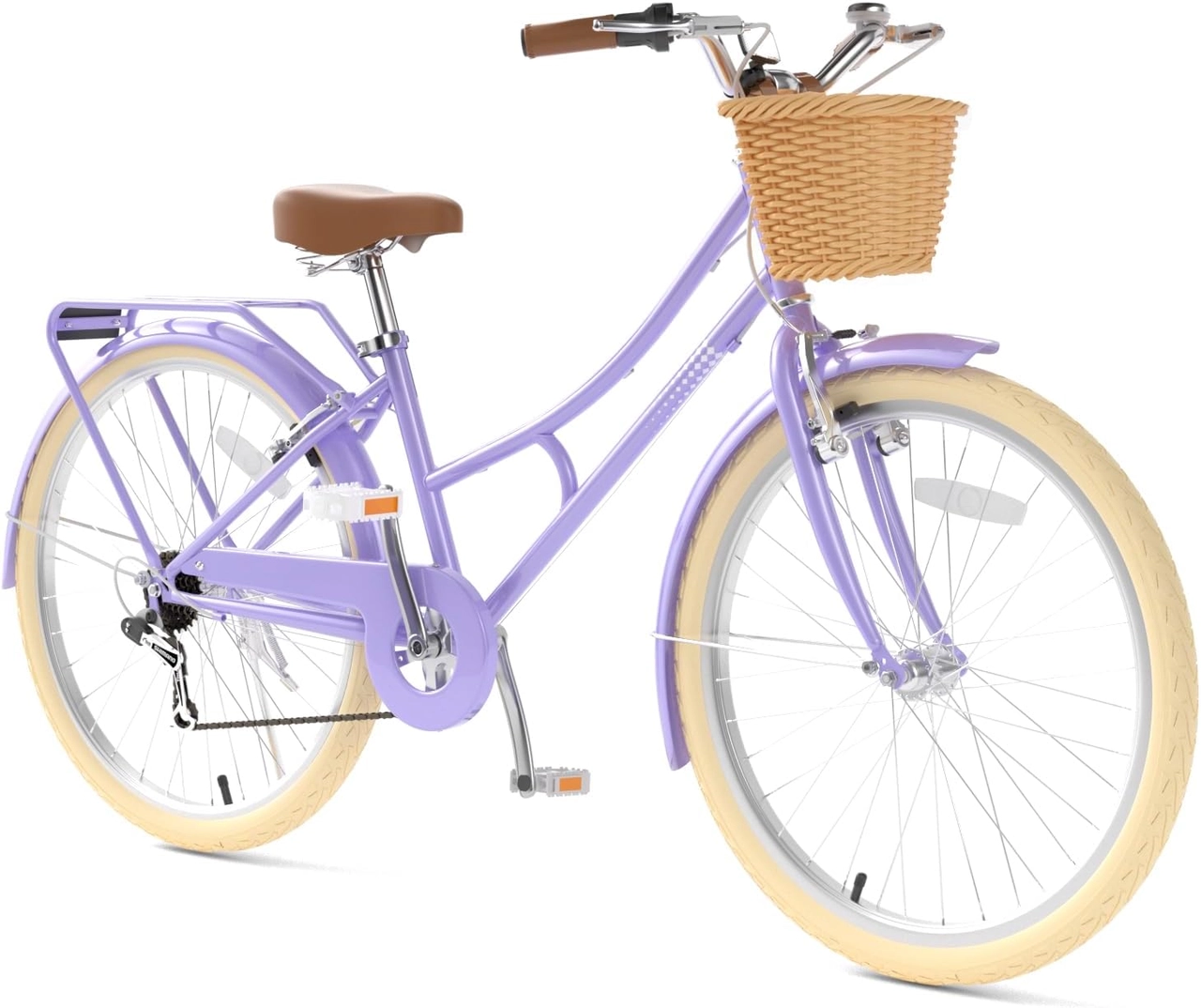 XJD Beach Cruiser Bike with V-Brake – Purple, 26-Inch
Includes Mint Green / 24 Inch and Pink / 24 Inch selections, plus 20- and 26-inch labels for comparison; the Purple selection is listed only in 26 Inch.
XJD Beach Cruiser Bike with Rear Rack & V-Brake – Pink lists 20 Inch, 24 Inch, and 26 Inch SKU labels. That makes its 24 Inch selection directly relevant to this guide, while the other labels show neighboring catalog choices that must be evaluated separately.
XJD Beach Cruiser Bike with V-Brake – Purple, 26-Inch has Mint Green options labeled 20 Inch, 24 Inch, and 26 Inch; Pink options in those same three sizes; and a Purple / 26 Inch option. Despite “Purple, 26-Inch” in the exact product title, the supplied catalog includes 24-inch selections only in Mint Green and Pink. A title or color label is not evidence of rider fit.
When a 24-inch option is not appropriate
Pause if the rider is outside the 54–64 inch starting range, cannot stand over the exact frame comfortably, must overreach, cannot operate the brakes consistently, or loses confidence during basic handling. A child within the range can still need another size or frame, and a child in an overlap between ranges still needs direct comparison.
Follow the exact product manual or ask a qualified bicycle mechanic about assembly, adjustments, maintenance, compatibility, load limits, or torque because no such specifications were supplied here.
Make the final decision
First measure height and inseam. If height points toward 24 inches, have the child try the exact 24-inch selection and verify stand-over, reach, brake operation, starting, stopping, and confidence. Fit a bicycle helmet so it sits level and secure, with straps adjusted according to its manufacturer’s instructions. Buy the 24-inch bike only when it fits and can be controlled today—not simply because the rider is ages 10–14 or may grow into it.