Best Bicycle for 15-Year-Old Girls: Size and Fit Guide
Best bicycle for 15-year-old girls: Most riders now compare 24- and 26-inch bicycles, with frame reach and stand-over clearance deciding between them. Age is only a starting point; measure height and inseam, then confirm stand-over clearance, handlebar reach and braking control on the exact bicycle.
For a 15-year-old girl, start with measured height: consider 26-inch wheels above 60 in (153 cm), then confirm inseam, reach, brake control and confidence.
Choose the starting wheel size
Age does not determine bicycle fit by itself. XJD Bikes lists 24-inch bicycles for riders 54–64 in (137–163 cm) and ages 10–14, while 26-inch bicycles are a starting point for youth and adults over 60 in (153 cm). Because the rider is 15, use her height—not the younger age label—to begin the comparison.
| Measured rider height | Wheel-size starting point | What it means at age 15 |
|---|---|---|
| 48–60 in (122–152 cm) | 20 Inch | Listed for ages 7–12, but height can justify a fit check; do not reject it solely because of age. |
| 54–64 in (137–163 cm) | 24 Inch | Listed for ages 10–14; at 15, treat it only as a height-based starting point. |
| Over 60 in (153 cm) | 26 Inch | The principal starting point for youth and adults above this height. |
The height ranges overlap, so the chart cannot make the final decision. Where two sizes appear possible, compare both in person and choose the one that gives better control. Never move up merely to leave growing room.
Measure before comparing bicycles
Measure the rider barefoot or in thin socks, standing straight against a wall. Record total height from floor to the top of the head. Then measure inseam from the floor to the crotch, using a firm book held level to approximate where the saddle meets the body.
Bring both measurements when shopping. Wheel size is only a category label; frame shape, saddle adjustment and handlebar position affect how a bicycle feels. The supplied chart does not provide an inseam-to-frame formula, so do not invent one. Use inseam during an actual stand-over and riding check.
Perform a five-part fit check
- Stand-over: With both feet on the ground, she should be able to straddle the bicycle without the frame preventing a stable stance.
- Start and stop: She should mount, begin riding, stop and put a foot down without needing to tip the bicycle sharply.
- Reach: Seated normally, she should reach the handlebar without stretching, locking her elbows or shifting forward awkwardly.
- Brake control: She should reach and operate the brake controls confidently while maintaining her grip and steering position.
- Turning: At a slow, controlled pace, she should steer and turn without the bicycle feeling cumbersome.
The American Academy of Pediatrics advises having the child try the bicycle, checking stand-over, control and brake reach, and avoiding an oversized bicycle bought for future growth. Current confidence matters: a technically plausible size is unsuitable if she cannot control it calmly.
Age-relevant XJD bicycles to compare
The following two current options are included as fit examples, not automatic recommendations. Most riders now compare 24- and 26-inch bicycles, with frame reach and stand-over clearance deciding between them.
XJD Beach Cruiser Bike with Rear Rack & V-Brake – Pink
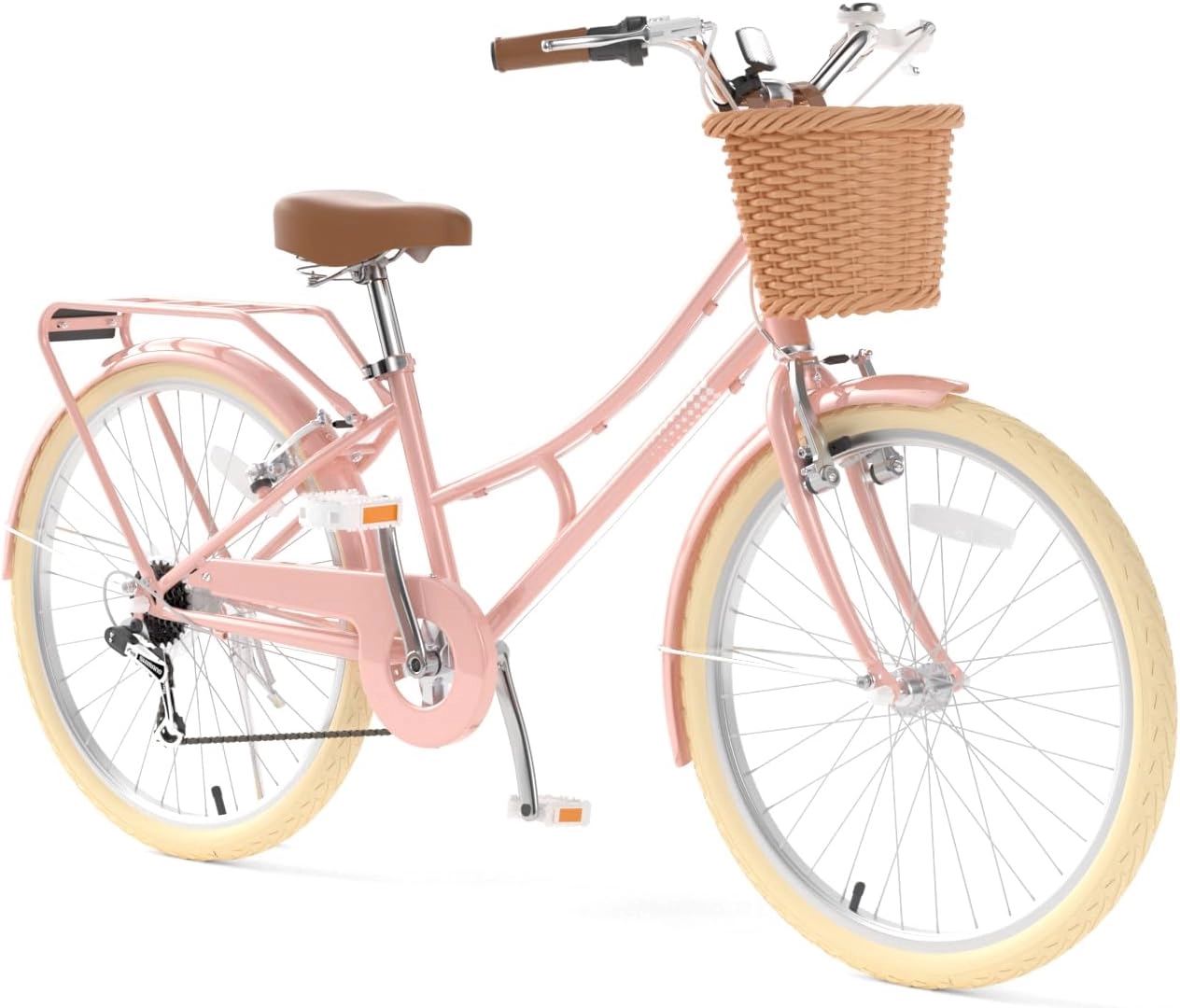
This is an upright geared cruiser with a rear rack. The live catalog lists 20-inch, 24-inch, 26-inch wheel choices and an age range that includes 15; select the exact size from height, inseam, brake reach and a hands-on control check.
XJD Beach Cruiser Bike with U-Brake – Pink
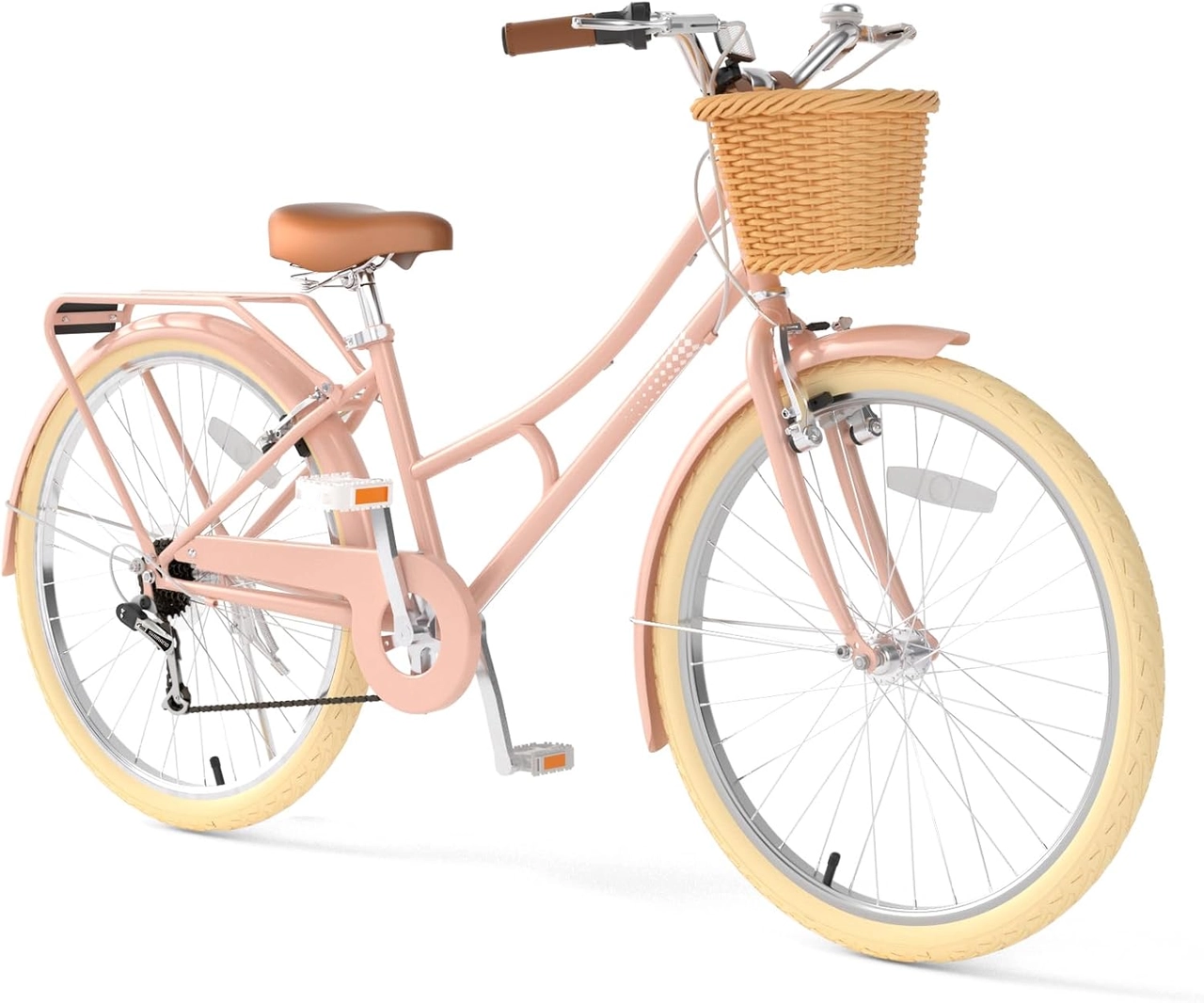
This is a step-through cruiser with 24- and 26-inch choices. The live catalog lists 24-inch, 26-inch wheel choices and an age range that includes 15; select the exact size from height, inseam, brake reach and a hands-on control check.
For a wider comparison, use the bicycle guide for 15-year-olds together with the full girls’ bicycles collection. Those pages help compare sizes; the child’s measurements still control the final decision.
Check setup, brakes and helmet fit
Before riding, confirm that the bicycle is assembled and adjusted according to the exact product manual. The product title identifies a rear rack and V-brake, but the supplied facts do not establish adjustment procedures, torque values, compatibility or load limits. Follow the manual for those details or ask a qualified bicycle mechanic to inspect the setup.
Have the rider operate the brakes from her normal hand position before entering traffic or riding at speed. A helmet must fit properly, sit level and have its straps arranged according to the helmet manufacturer’s instructions, consistent with U.S. Consumer Product Safety Commission guidance.
Make the final decision
Write down her height and inseam, identify the matching 24- or 26-inch starting point, and try every plausible option. Choose the bicycle on which this 15-year-old can stand over, reach, brake, start, stop and turn confidently today. If those checks fail, reject that size—even if its wheel label appears to match or promises more growing room.
Recommended products
-
Save 14%
XJD Beach Cruiser Bike with Rear Rack & V-Brake – Mint Green
XJD Beach Cruiser Bike with Rear Rack & V-Brake – Mint Green brings the reco…
Beach Cruiser Bikes Training Wheels No Geared 20 Inch -
Save 14%
XJD Beach Cruiser Bike with Rear Rack & V-Brake – Pink
XJD Beach Cruiser Bike with Rear Rack & V-Brake – Pink brings the recorded f…
Beach Cruiser Bikes Training Wheels No Geared 20 Inch -
Save 5%
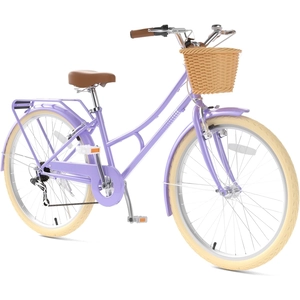
XJD Beach Cruiser Bike with V-Brake – Purple, 26-Inch
XJD Beach Cruiser Bike with V-Brake – Purple, 26-Inch brings the recorded fit, r…
Beach Cruiser Bikes Training Wheels No Geared Purple / 26 Inch -
Save 20%
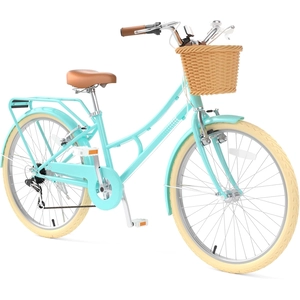
XJD Beach Cruiser Bike with U-Brake – Green, 24-Inch
XJD Beach Cruiser Bike with U-Brake – Green, 24-Inch brings the recorded fit, ri…
Beach Cruiser Bikes Training Wheels No Single Speed Green / 24 Inch