

Kids' Bike Helmets: Fit Guide That Actually Works
Measure your child’s head circumference, match it to the helmet’s stated range, then confirm a level, stable fit with correctly adjusted straps.
Measure the head before comparing sizes
Use a flexible tape around the widest part of the head: just above the eyebrows, above the ears and around the fullest point at the back. Keep the tape level and comfortably snug rather than tight. Record the result in centimeters because the clearest supplied helmet ranges use centimeters.
Measure twice. If the readings differ, repeat the measurement rather than averaging them. Hair should be worn as it normally will be while riding, without bulky accessories beneath the helmet. A size label such as S, M or L is not enough by itself; the corresponding circumference range is what makes a useful comparison.
Compare the measurement with the stated range
| Catalog option | Supplied sizing information | How to use it |
|---|---|---|
| XJD Kids Bike Helmet Purple | S: 46–51 cm; M: 52–56 cm | Compare the measured circumference directly with the stated range, then perform the fit checks below. |
| XJD Kids Bike Helmet & Protective Gear Set – Black | S, M and L labels; L is 55–58 cm | The supplied facts give a numerical range only for L. Confirm the exact range for S or M before choosing either size. |
The XJD Kids Bike Helmet Purple provides two explicit circumference ranges across its supplied color variants, while the XJD Kids Bike Helmet & Protective Gear Set – Black offers a useful 55–58 cm L comparison and includes protective gear in the catalog title. These options help parents compare a measured head with disclosed sizing rather than guessing from age or a letter alone.
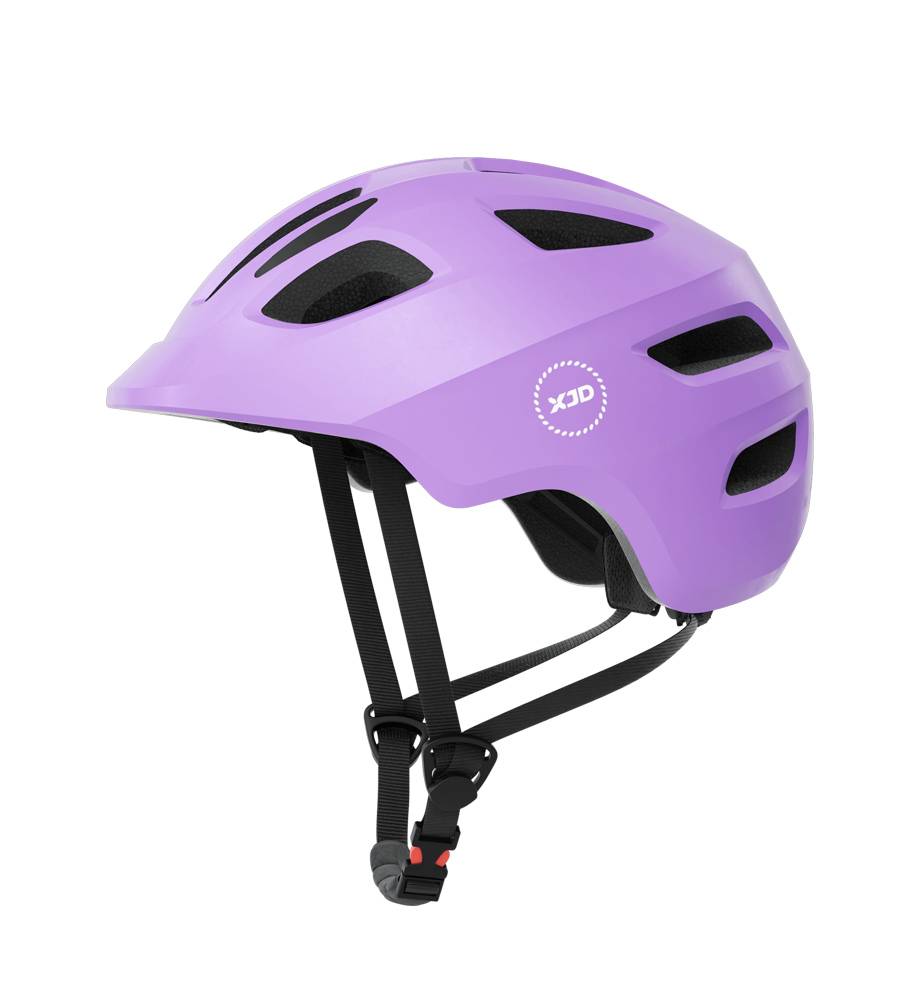 XJD Kids Bike Helmet Purple
Relevant for measured head circumferences that can be compared with the supplied S range of 46–51 cm or M range of 52–56 cm, followed by an individual fit check.
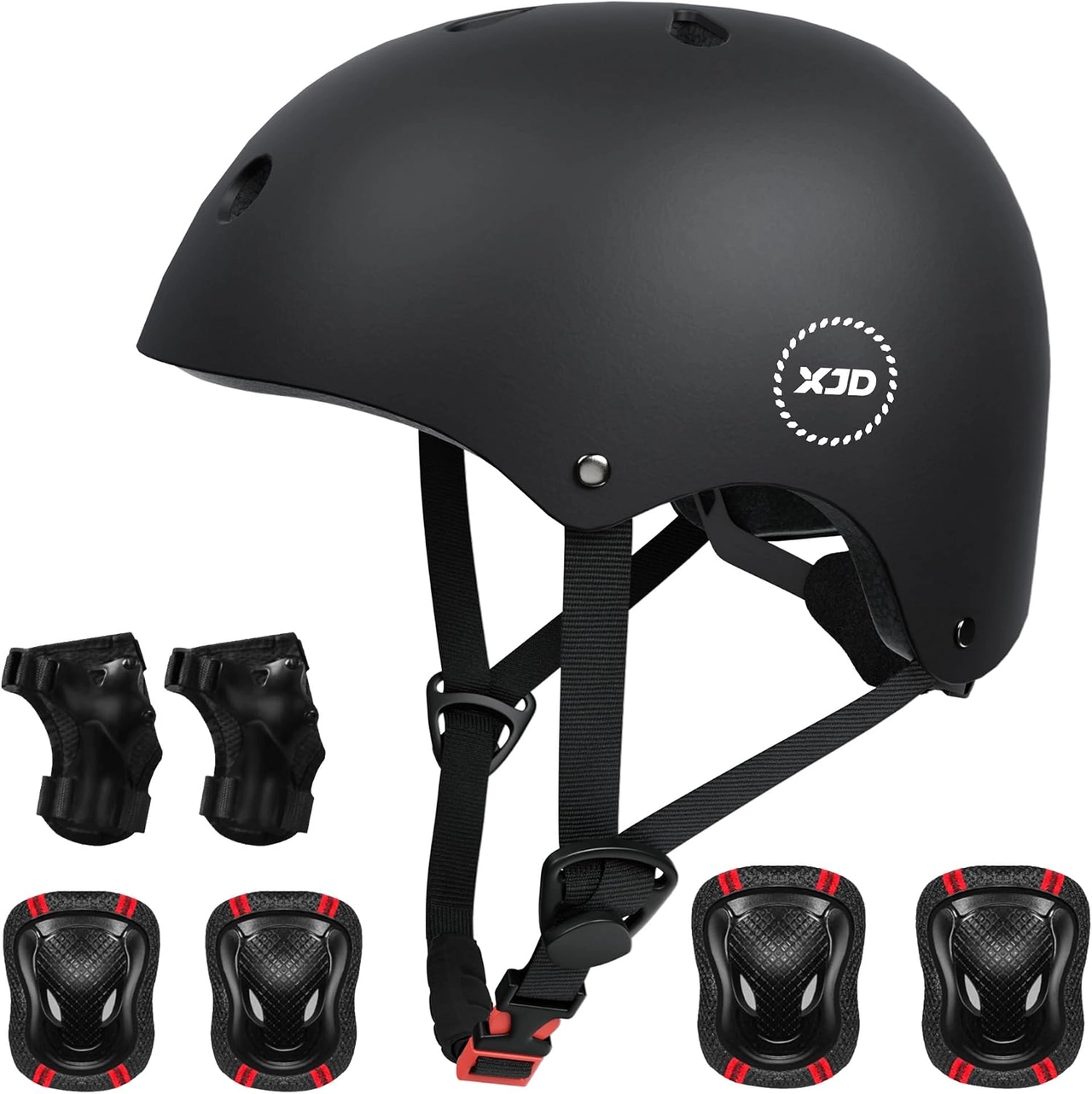 XJD Kids Bike Helmet & Protective Gear Set – Black
Relevant as a helmet and protective gear set with a disclosed L range of 55–58 cm. The supplied S and M labels lack numerical ranges, so confirm them before choosing.
Do not treat neighboring ranges as interchangeable. A 51 cm measurement is within the supplied S range for the first helmet, while 52 cm is within its supplied M range; the catalog facts do not establish that either size covers the gap between those figures. If a measurement falls between ranges or on a boundary that remains unclear, consult the exact product manual or seller sizing information before ordering.
Put the helmet on correctly
A circumference match is only the first screen. The U.S. Consumer Product Safety Commission advises that a bicycle helmet must fit properly, sit level and have its straps used according to the manufacturer’s instructions. Place the helmet level on the head rather than tipped back with the forehead exposed or tipped forward over the eyes.
Follow the exact helmet manual to adjust any internal fit system and straps. Do not invent an adjustment sequence or rely on another model’s instructions, because the supplied catalog facts do not describe those mechanisms.
Run a practical fit check
- Check coverage: The helmet sits level and covers the forehead without blocking vision.
- Check stability: With the retention system adjusted according to the manual, ordinary head movement should not make the helmet slide substantially out of position.
- Check the straps: They lie flat, are not twisted and are routed and fastened exactly as the manufacturer directs.
- Check comfort: Ask about concentrated pressure, pinching or looseness. A child should not need to tolerate pain for the helmet to stay stable.
- Recheck after movement: Have the child look up, down and side to side, then verify that the helmet remains level.
If the helmet cannot remain level and stable without uncomfortable pressure, that size or model is not a good fit, even when the measurement appears inside its stated range. Do not add unapproved padding or alter the shell, straps or retention system to force a fit.
Know when these products are relevant
The XJD Kids Bike Helmet Purple is relevant when the child’s measured circumference can be compared with its supplied S range of 46–51 cm or M range of 52–56 cm. Its Black, Blue, Green, Pink and Purple variants carry those same supplied size ranges. Color does not replace the individual fit check.
The XJD Kids Bike Helmet & Protective Gear Set – Black is relevant when a parent wants to consider a catalog option that combines a helmet and protective gear, particularly when comparing its disclosed L range of 55–58 cm. The supplied facts do not provide numerical ranges for its S and M labels, so those labels alone cannot confirm fit.
Neither product should be selected from the child’s age, bicycle wheel size or appearance. Helmet fit depends on the measured head and an on-head check, while bicycle fit is a separate decision involving rider height, inseam, reach, brake control and current confidence.
Make the final decision
Write down the circumference, shortlist only sizes with a clearly stated matching range, and have the child try the helmet. Keep it only if it sits level, stays stable, feels comfortable and allows the straps to be adjusted exactly as its manual requires. If any of those checks fails—or the numerical range is unavailable—pause and choose a better-documented size or model rather than guessing.
Bikes for your next adventure
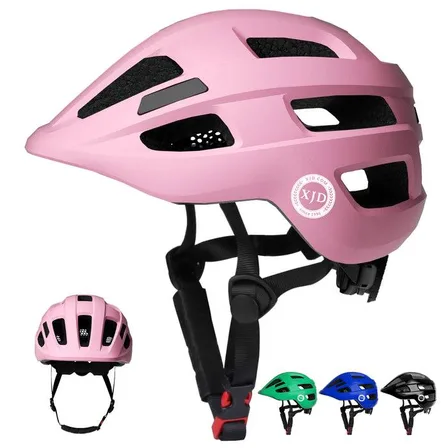
XJD Kids Bike Helmet
XJD Kids Bike Helmet makes helmet selection clearer: measure first, then choose …$59.99
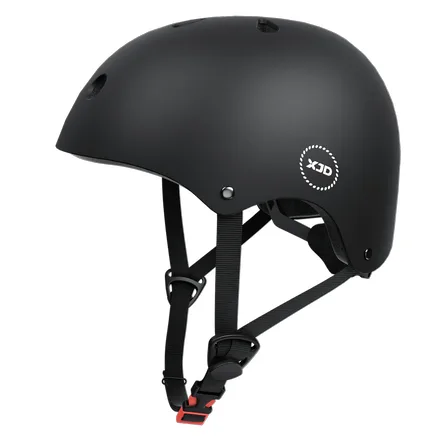
XJD Kids Bike Helmet Protective Gear Set
XJD Kids Bike Helmet Protective Gear Set makes helmet selection clearer: measure…$59.99
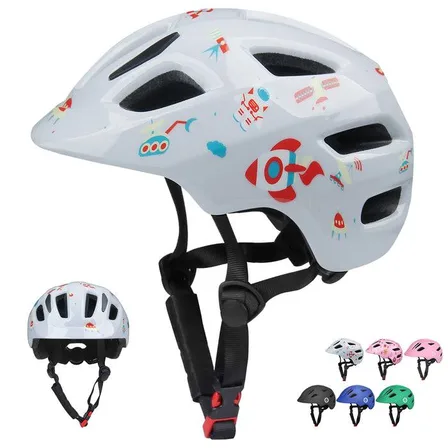
XJD White Astronaut Kids' Bike Helmet
4 reviews
XJD White Astronaut Kids' Bike Helmet makes helmet selection clearer: measu…$59.99