

Kids Bike Pedal Thread Damage: When to Stop
Kids bike pedal thread damage often first appears as a pedal that sits crooked, loosens repeatedly or wobbles where its spindle enters the crank arm. Pedals use side-specific threads and must begin straight by hand during assembly. Riding or forcing a misthreaded pedal can remove more material and allow the pedal to detach, so keep the child off the bicycle until both the pedal and crank have been assessed.
Locate the movement precisely
Hold the crank arm still and move the pedal gently without placing fingers near the chainring. Observe whether play is inside the pedal body, at the spindle-to-crank connection or in the crank itself. Look for a visible gap, metal dust, a tilted spindle or fresh damage around the hole. Do not ask the child to stand on it as a test.
Remember left and right are different
The left and right pedals commonly tighten in different rotational directions and are marked for their sides. A pedal installed on the wrong side can start badly and damage both parts. Do not compensate with a wrench, impact tool, glue or thread tape. Consult the assembly guide before removing or fitting anything.
Assess both mating parts
Replacing only the pedal will not fix stripped threads in the crank, and reusing a damaged spindle can harm a new crank. A qualified bicycle mechanic can judge whether the manufacturer allows a specific repair or requires matching replacement parts. The pedal should thread correctly, seat fully and rotate without side play under the specified installation method.
Complete a controlled verification
After approved service, check both pedals, crank arms, chain movement and brakes. Rotate the cranks through full turns while the bicycle is supported, listening for clicks and watching alignment. Then have the child sit and pedal gently on dry level ground before applying standing force. Stop for any renewed looseness, tilt or noise.
How the current product examples fit
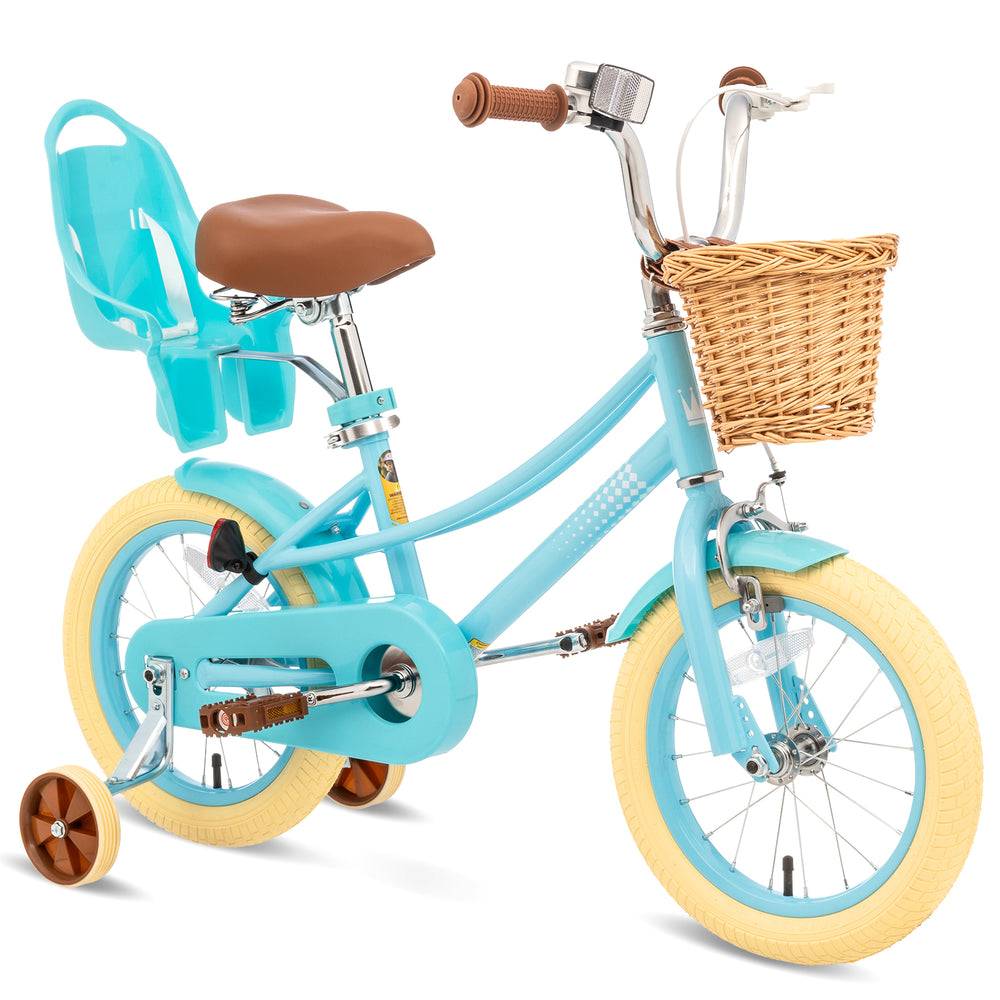
The blue XJD kids bike is offered across several wheel sizes. Whichever option is selected, its left and right pedals and crank arms form matched interfaces that require correct side identification during assembly. See XJD Kids Bike Blue for the exact current options and specifications.
Quick checklist
- Stop at the first pedal wobble.
- Separate pedal play from crank play.
- Confirm left and right markings.
- Never force a crooked spindle.
- Inspect both mating thread surfaces.
Common questions
Can thread-locking liquid fix a loose kids bike pedal?
Not when threads are damaged or installation is wrong. It can hide the cause and is not a substitute for sound compatible parts.
Why does one pedal tighten backward?
The left pedal usually uses a reverse thread to resist loosening in service. Follow the labels and exact manual rather than guessing.
Explore related guides
Use the kids-bike collection and training-wheel-bike collection to compare other suitable configurations without assuming every model has the same features.
Bottom line
A pedal should be straight, fully seated and stable. Early inspection may prevent further crank damage; repeated tightening and test rides can turn a correctable assembly issue into sudden component loss.
Bikes for your next adventure
XJD Kids Bike Blue
XJD Kids Bike Blue brings the recorded fit, riding and configuration details tog…$139
$159
XJD Kids Bike Purple
XJD Kids Bike Purple brings the recorded fit, riding and configuration details t…$139
$159
XJD Kids Bike Pink
XJD Kids Bike Pink brings the recorded fit, riding and configuration details tog…$139
$159