

16 Inch Bikes Height and Age Guide: Measure Before You Buy
A 16-inch bike is a starting point for children ages 4–7 and 40–48 in (102–122 cm) tall, but measured fit and control decide whether it is right.
Measure before choosing 16 inches
Measure the child without shoes, standing straight against a wall. Record total height from the floor to the top of the head. Then measure inseam from the floor to the crotch, using a rigid book held level to represent where a bike would meet the body.
Compare total height with the XJD Bikes starting range first. Keep the inseam measurement for the actual bicycle fit check: wheel diameter does not reveal frame stand-over clearance, saddle adjustment or reach. Two 16-inch bikes can fit differently even though their wheel-size labels match.
| Wheel size | Age starting point | Rider-height starting point |
|---|---|---|
| 14 Inch | Ages 3–6 | 37–45 in / 94–114 cm |
| 16 Inch | Ages 4–7 | 40–48 in / 102–122 cm |
| 18 Inch | Ages 5–9 | 43–52 in / 109–132 cm |
These ranges overlap because age and height cannot settle the decision alone. Prioritize the child’s measured height, inseam, reach, brake control and current confidence.
Check the bike with the child present
Have the child try the exact bicycle rather than choosing from the size label alone. The American Academy of Pediatrics advises against buying an oversized bicycle just for growth. A bike that is too large can make mounting, stopping and steering harder to control.
- Stand-over: With the child standing over the bike, confirm that the frame does not prevent a stable stance. Use the measured inseam to judge the actual clearance.
- Starting and stopping: Ask the child to get into position, begin moving and stop while remaining composed and balanced.
- Reach: Check that the child can hold the controls without stretching, locking the arms or shifting into an awkward posture.
- Brake control: Confirm that the child can reach and operate the bicycle’s braking controls reliably. Do not assume hand size or strength from age.
- Confidence: Watch what the child does, not just what the chart predicts. Hesitation or loss of control means the fit needs reconsideration.
What to do at the edges of the range
A child below 40 in (102 cm) is outside the 16-inch starting range. Compare the child with a 14-inch option, whose starting range is 37–45 in (94–114 cm), then perform the same individual checks. Do not move up merely because the child is within the suggested age band.
A child above 48 in (122 cm) is outside the 16-inch range. An 18-inch bike starts at 43–52 in (109–132 cm), but it is not automatically correct: stand-over, reach, brake control and confidence still have to work on the exact bike.
For a child inside 40–48 in, the 16-inch label is only permission to evaluate that size—not proof of fit. Where ranges overlap, choose according to demonstrated control and the actual bicycle geometry rather than age or hoped-for growing room.
How the supplied XJD options help
The XJD Kids BMX Bike with Training Wheels – Pink Blue and XJD Kids BMX Bike with Training Wheels – Blue are relevant because each is offered with 12 Inch, 14 Inch and 16 Inch SKU labels. Their 16 Inch variants let you consider the requested wheel size, while their smaller labels provide catalog comparison points when a measured child falls below the 16-inch starting range. Color wording distinguishes the catalog titles; it is not fit evidence.
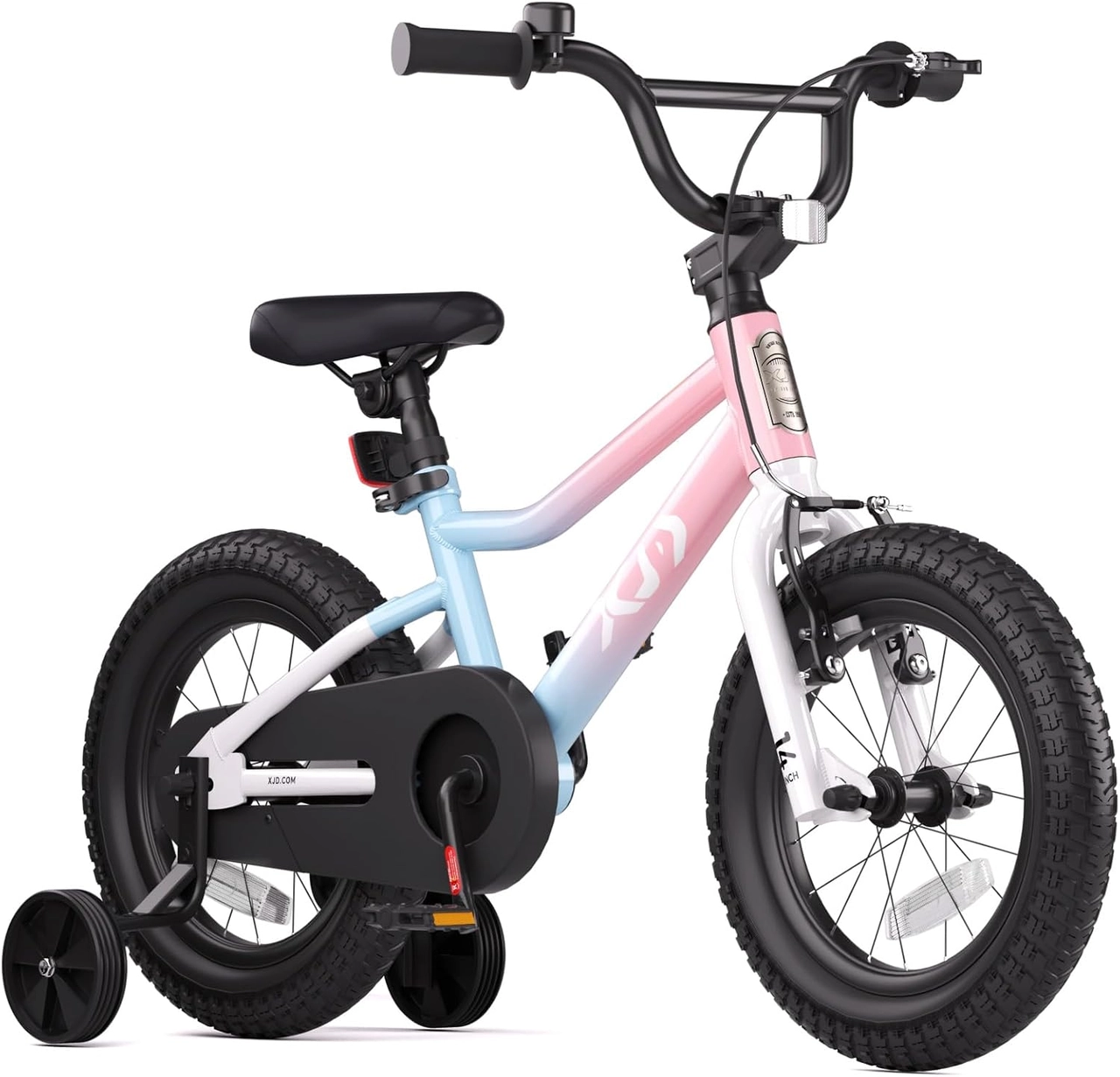 XJD Kids BMX Bike with Training Wheels – Pink Blue
Available in 12 Inch, 14 Inch and 16 Inch SKU labels, this pink-and-blue Kids' BMX Bike provides a relevant 16-inch option plus smaller catalog comparison points; actual fit still requires measurement and a hands-on control check.
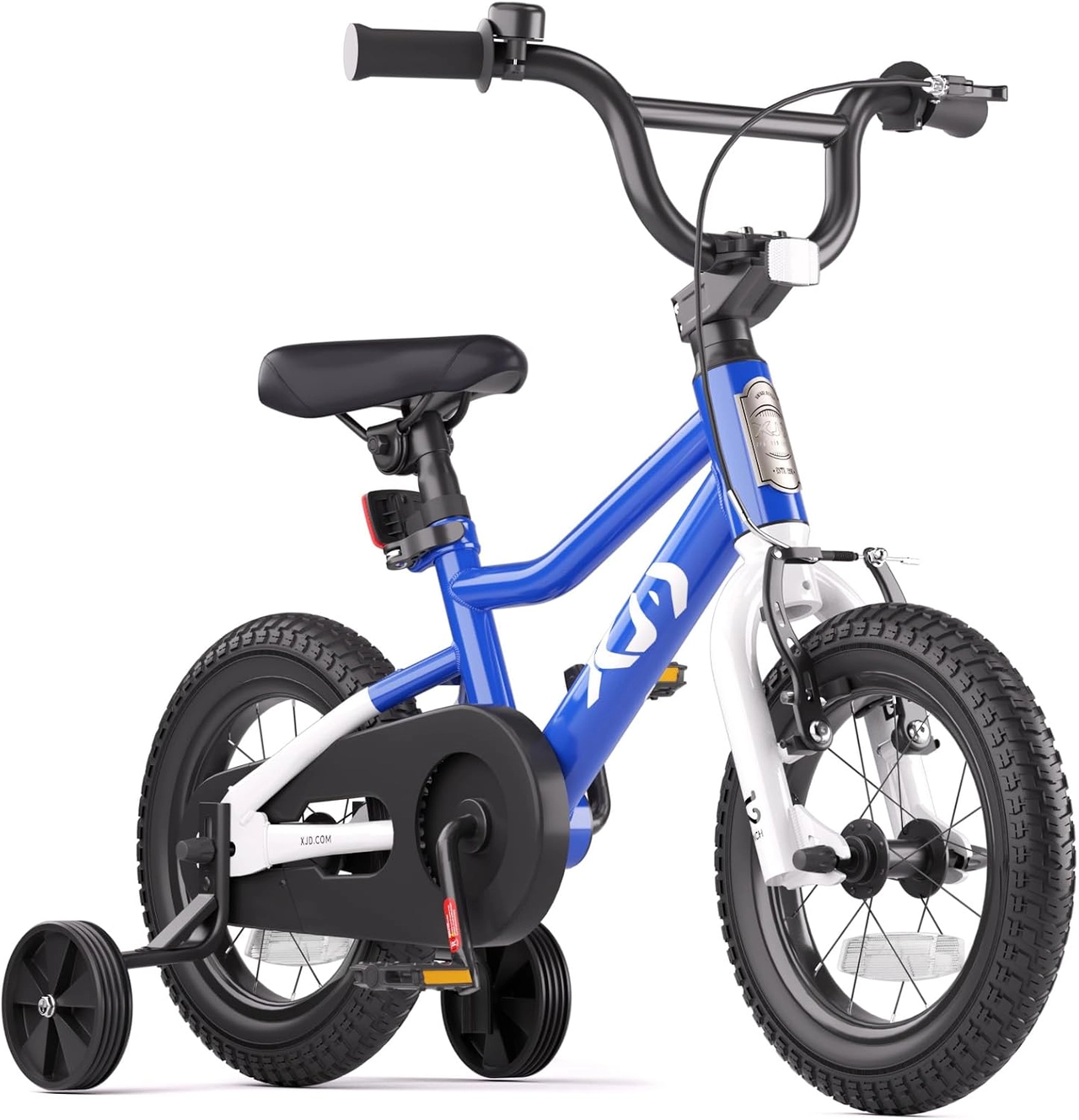 XJD Kids BMX Bike with Training Wheels – Blue
This blue Kids' BMX Bike is offered with 12 Inch, 14 Inch and 16 Inch SKU labels, making its 16-inch variant relevant to the guide while preserving smaller-size comparison choices for measured riders below the starting range.
These facts do not establish frame dimensions, brake type, load limits, assembly details or live availability. Verify the selected SKU label and conduct the fit check on the exact bicycle. Follow its product manual for assembly, maintenance, compatibility and torque instructions, or use a qualified bicycle mechanic when those details are uncertain.
Complete the safety check
Use a bicycle helmet that fits properly. Following U.S. Consumer Product Safety Commission guidance, position it level and adjust its straps according to the helmet manufacturer’s instructions. A suitable bike size does not correct a poorly fitted helmet, and a helmet does not correct an oversized bicycle.
Before the first ride, confirm that the bicycle has been assembled and checked according to its exact manual. Choose a controlled place for the child to demonstrate mounting, steering, braking and stopping before riding farther.
Make the 16-inch decision
Measure height and inseam, compare the height with 40–48 in (102–122 cm), and then test stand-over, reach, brake operation and confidence on the exact 16-inch bike. Buy that size only when all of those checks work now; if they do not, compare the adjacent size range and repeat the fit check instead of sizing for future growth.
Bikes for your next adventure
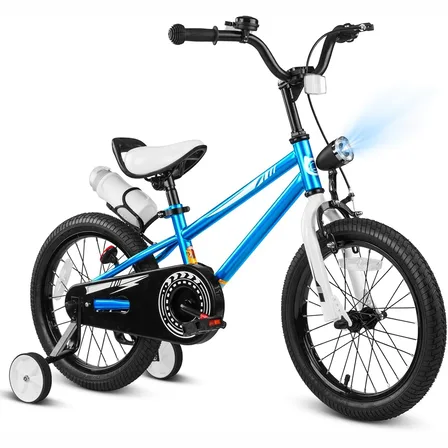
XJD Boys Bike Blue
XJD Boys Bike Blue brings the recorded fit, riding and configuration details tog…$169
$199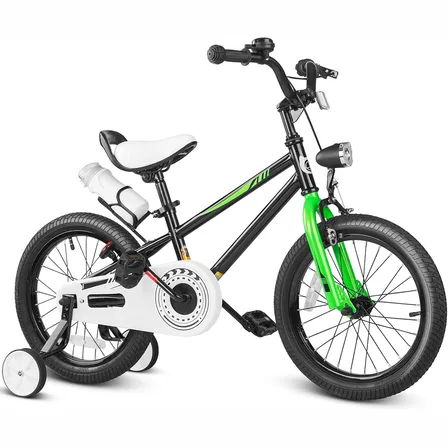
XJD Boys Bike Black
XJD Boys Bike Black brings the recorded fit, riding and configuration details to…$169
$199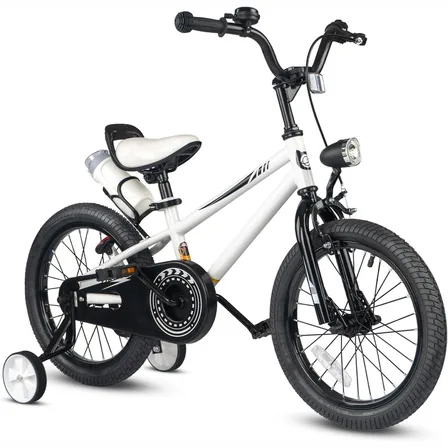
XJD Boys & Grils Bike white
XJD Boys & Grils Bike white brings the recorded fit, riding and configuratio…$169
$199