

20 Inch Bikes Height and Age Guide: Measure Before You Buy
A 20-inch bike is a starting match for riders ages 7–12 and 48–60 inches (122–152 cm) tall, but measured fit and control decide whether to buy.
Measure height and inseam first
Measure the child without shoes, standing straight against a wall. Record total height from the floor to the top of the head. Then measure inseam from the floor to the crotch while the child stands with feet slightly apart. Use a firm, level book between the legs to make the inseam measurement easier to repeat.
Compare total height with the XJD Bikes 20-inch starting range: 48–60 inches (122–152 cm). Age 7–12 is only a secondary clue. A younger or older child may still need a different size because body proportions, reach and confidence vary.
Compare the measurements with nearby wheel sizes
| Wheel size | Age starting point | Rider-height starting point |
|---|---|---|
| 16 Inch | 4–7 | 40–48 in / 102–122 cm |
| 18 Inch | 5–9 | 43–52 in / 109–132 cm |
| 20 Inch | 7–12 | 48–60 in / 122–152 cm |
| 24 Inch | 10–14 | 54–64 in / 137–163 cm |
Overlapping ranges are intentional starting points, not proof that two sizes fit equally. If the child falls near 48 or 60 inches, compare adjacent sizes in person. Do not move up merely to leave room for growth; an oversized bicycle can make starting, stopping and steering harder.
Perform the fit check on the exact bicycle
Have the child try the assembled bicycle while wearing the shoes normally used for riding. Check these points before deciding:
- Stand-over: The child should be able to straddle the bicycle without the frame preventing a stable stance.
- Reach: Seated in a normal riding position, the child should reach the handlebar without stretching, locking the elbows or leaning awkwardly.
- Brake control: The child must be able to reach and operate the available brake controls comfortably. Do not assume height alone guarantees adequate hand reach.
- Starting and stopping: Ask the child to demonstrate controlled starts and stops in a clear, supervised area.
- Confidence: Watch for hesitation caused by the bicycle feeling tall, long or difficult to control.
If any check fails, do not treat the published age or height range as permission to proceed. Compare another size or ask a qualified bicycle mechanic to assess fit and adjustment.
How the supplied XJD options are relevant
XJD Kids Bike Blue and XJD Kids Bike Purple are both Training Wheel Bikes with selectable 12 Inch, 14 Inch, 16 Inch and 20 Inch SKU labels. Their 20 Inch options make them directly relevant once the rider’s measurements place that size under consideration; the other labels provide smaller-size comparison points. The catalog facts do not establish individual fit, current availability or component specifications.
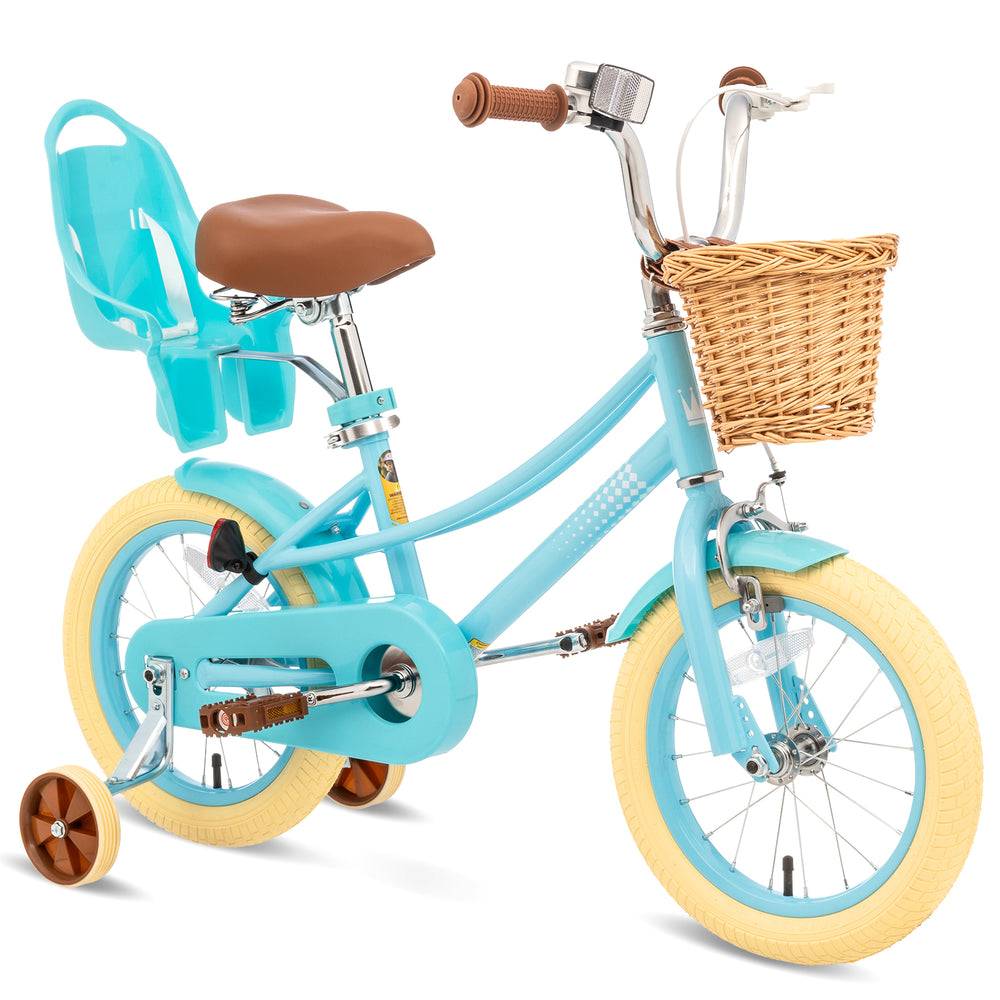 XJD Kids Bike Blue
A Training Wheel Bike offered with 12 Inch, 14 Inch, 16 Inch and 20 Inch SKU labels; its 20 Inch option is relevant after confirming the rider’s measurements and hands-on fit.
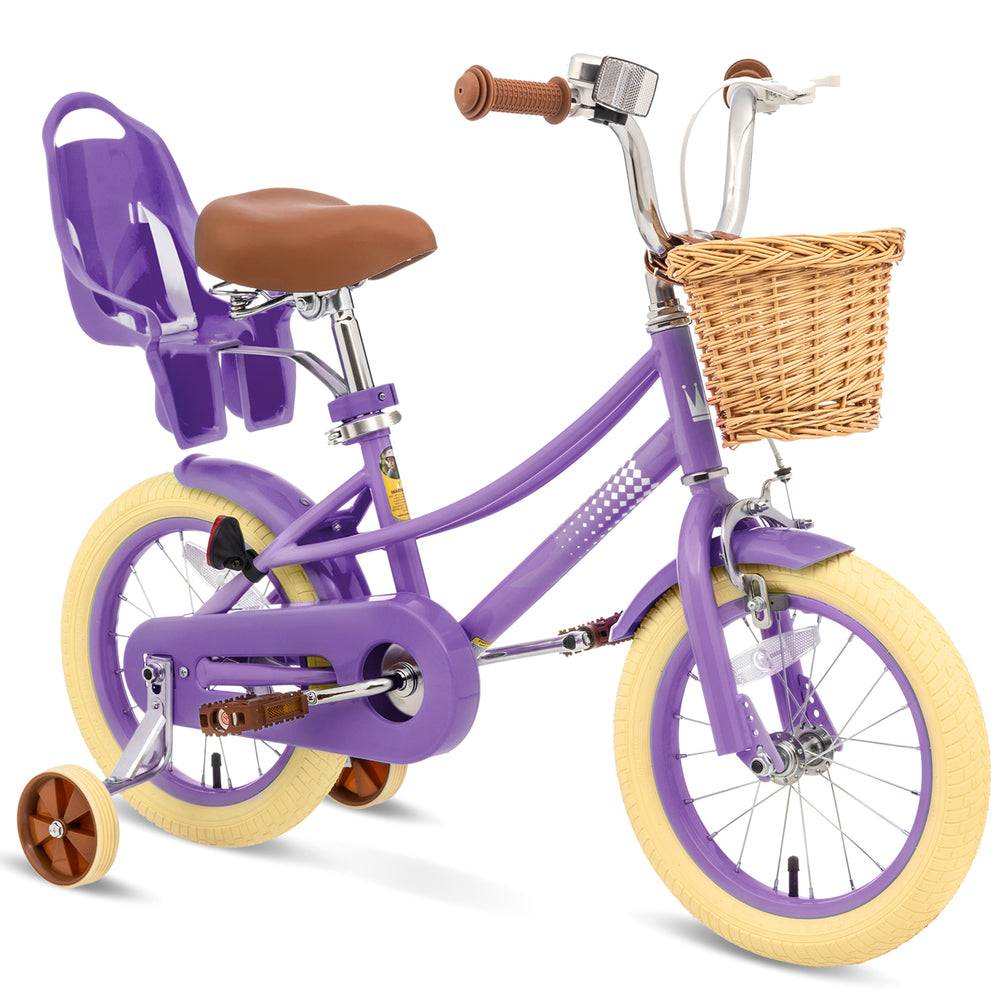 XJD Kids Bike Purple
A Training Wheel Bike with 12 Inch, 14 Inch, 16 Inch and 20 Inch SKU labels. Consider the 20 Inch option only after checking height, stand-over, reach, brake control and confidence.
Choose the exact size label deliberately when viewing either product. Color does not change the fit decision, and the shared list of size labels does not prove that every child will fit both bicycles identically. Confirm stand-over, reach, brake access and confidence on the exact assembled model.
Know when a 20-inch bike is not the answer
A 20-inch bicycle is not the appropriate default when the rider is outside its 48–60-inch starting range. A rider below that range should be compared with the smaller standards shown above; a rider near or above the upper boundary should also compare the 24-inch starting range. Even within the stated range, reject a 20-inch option if the child cannot stand over it securely, reach the controls comfortably or ride with present confidence.
Do not compensate for poor fit by inventing assembly changes or adjustments. Follow the manual for the exact product for assembly, maintenance, compatibility, load limits and torque requirements. If the instructions are missing, unclear or the bicycle cannot be adjusted to the rider, use a qualified bicycle mechanic.
Complete the decision before purchase
- Record the child’s current barefoot height and inseam.
- Use 48–60 inches (122–152 cm) and ages 7–12 only as the 20-inch screening range, prioritizing measured height over age.
- Try the exact bicycle and verify stand-over, reach, brake control, starting, stopping and confidence.
- Compare a neighboring size when measurements sit near a boundary or control is uncertain.
- Choose a properly fitting helmet that sits level and is secured with its straps according to the helmet manufacturer’s instructions.
Buy the 20-inch size only when the rider’s measurements and the hands-on control check agree; otherwise, compare the adjacent wheel size before ordering.
Bikes for your next adventure
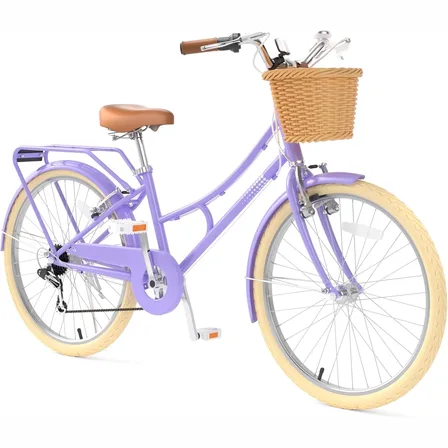
XJD Beach Cruiser Bike with U-Brake – Purple, 24-Inch
XJD Beach Cruiser Bike with U-Brake – Purple, 24-Inch brings the recorded fit, r…$159.99
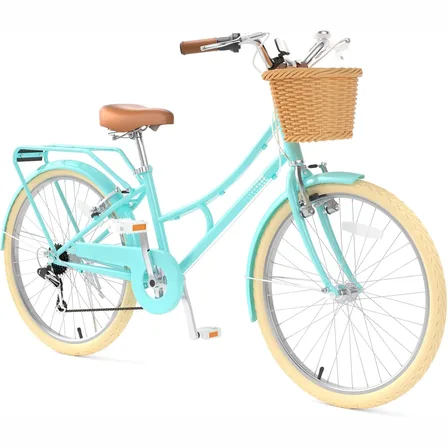
XJD Beach Cruiser Bike with U-Brake – Green, 24-Inch
XJD Beach Cruiser Bike with U-Brake – Green, 24-Inch brings the recorded fit, ri…$159.99
$199.99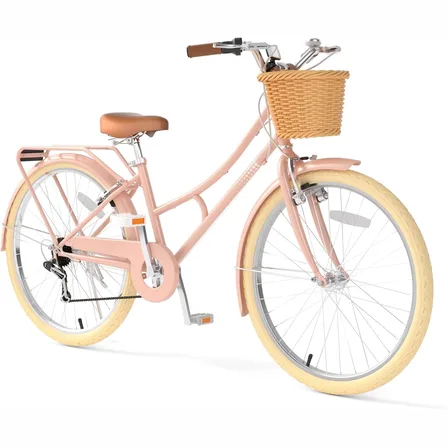
XJD Beach Cruiser Bike with U-Brake – Pink
3 reviews
XJD Beach Cruiser Bike with U-Brake – Pink brings the recorded fit, riding and c…$159.99