

26 Inch Bikes Height and Age Guide: Measure Before You Buy
A 26-inch bike is a starting point for youth and adults over 60 in (153 cm). Measure height and inseam, then confirm stand-over, reach, and brake control before buying.
Who a 26-inch bike may fit
Under the XJD Bikes wheel-size starting points, a 26-inch bike is intended for youth and adults taller than 60 in (153 cm). That threshold is not a guarantee of fit, and age alone cannot tell you whether a particular frame will be manageable.
A rider near the threshold should compare both 24-inch and 26-inch options through an individual fit check. The 24-inch starting range is ages 10–14 and heights 54–64 in (137–163 cm), so the height ranges overlap. That overlap is a reason to test control, not a reason to assume either wheel size will work equally well.
| Wheel size | XJD starting point | What to do |
|---|---|---|
| 24 Inch | Ages 10–14; 54–64 in / 137–163 cm | Consider when the rider falls within this range, then check the individual bicycle. |
| 26 Inch | Youth and adults over 60 in / 153 cm | Proceed only if stand-over, reach, braking, and confidence are also suitable. |
Measure height and inseam first
Measure the rider without shoes, standing straight against a wall on a level floor. Mark the top of the head and measure vertically from the floor. Compare that result with the starting points above.
Next, measure inseam. Have the rider stand with feet slightly apart and place a straight-edged book firmly between the legs to represent the saddle area. Measure from the floor to the top edge of the book. Record both measurements rather than rounding up for growth.
The inseam helps with the stand-over check, but do not invent a required clearance. Frame shape varies. Follow the exact product manual for its adjustment and fit instructions, or ask a qualified bicycle mechanic to evaluate the bicycle.
Check the rider on the actual bike
Have the rider try the exact bicycle whenever possible. The American Academy of Pediatrics advises against buying an oversized bike merely for a child to grow into. A larger bike can make mounting, stopping, turning, and recovering balance harder.
- Stand-over: With both feet flat on the floor, the rider should be able to straddle the frame without being forced onto tiptoes or contacting the frame uncomfortably.
- Reach: Seated in a normal riding position, the rider should reach the handlebar without locking the elbows, stretching the torso, or losing a stable posture.
- Brake control: The rider must comfortably reach and operate the brake controls while maintaining a secure grip and steering control.
- Confidence: Ask for a controlled start, straight ride, turn, stop, and dismount in a traffic-free area. Hesitation caused by the bike feeling too tall or hard to control is meaningful fit evidence.
When the catalog options are relevant
The supplied catalog includes two beach cruiser models with 26-inch labels, so they are relevant bicycles to compare after the rider clears the height starting point. Their listed size choices also make a 24-versus-26-inch comparison possible; the labels themselves do not replace an in-person fit check.
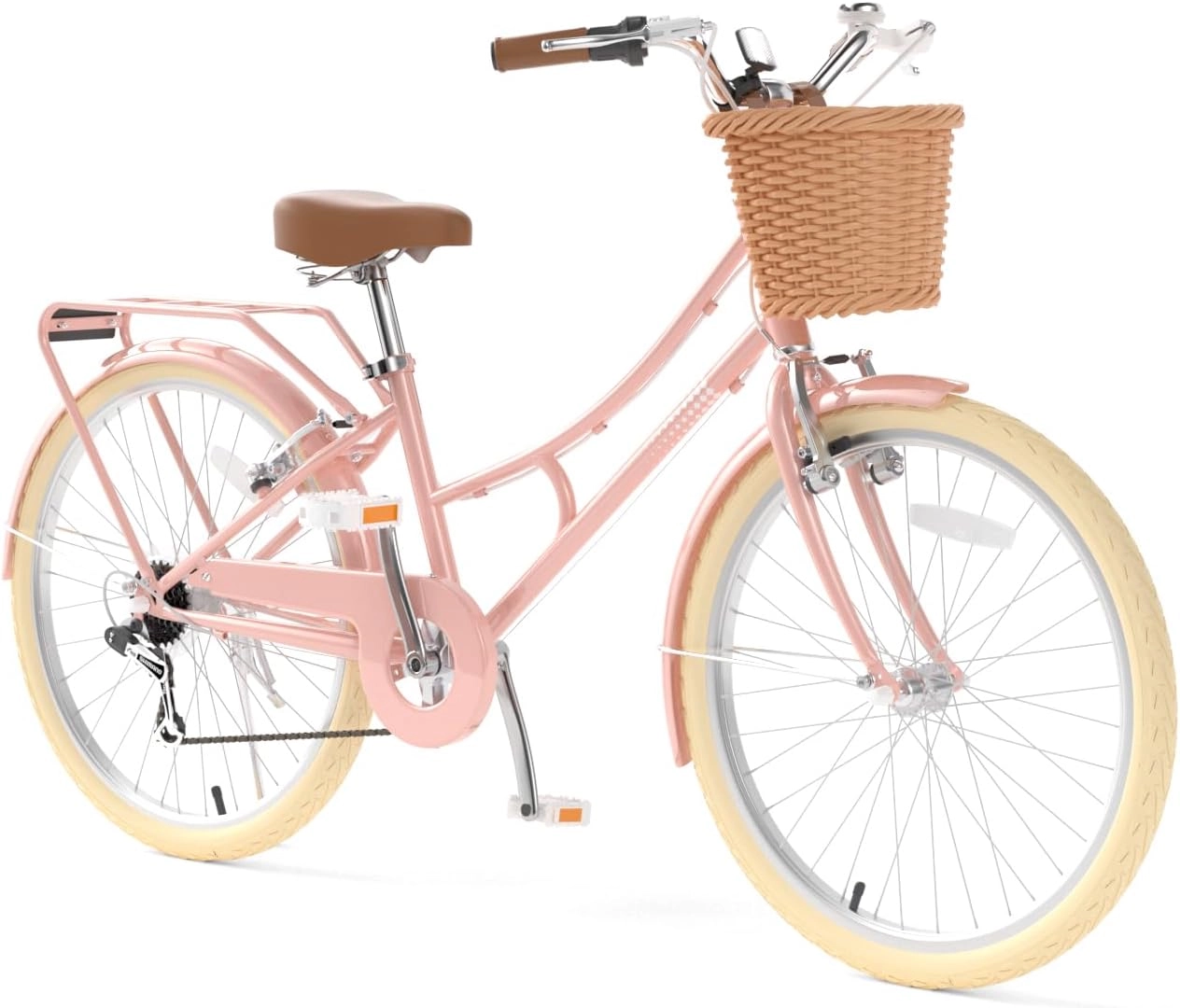 XJD Beach Cruiser Bike with Rear Rack & V-Brake – Pink
Listed in 20-inch, 24-inch, and 26-inch options, this beach cruiser can help riders near the overlapping 24- and 26-inch height ranges compare sizes after measuring and completing a fit check.
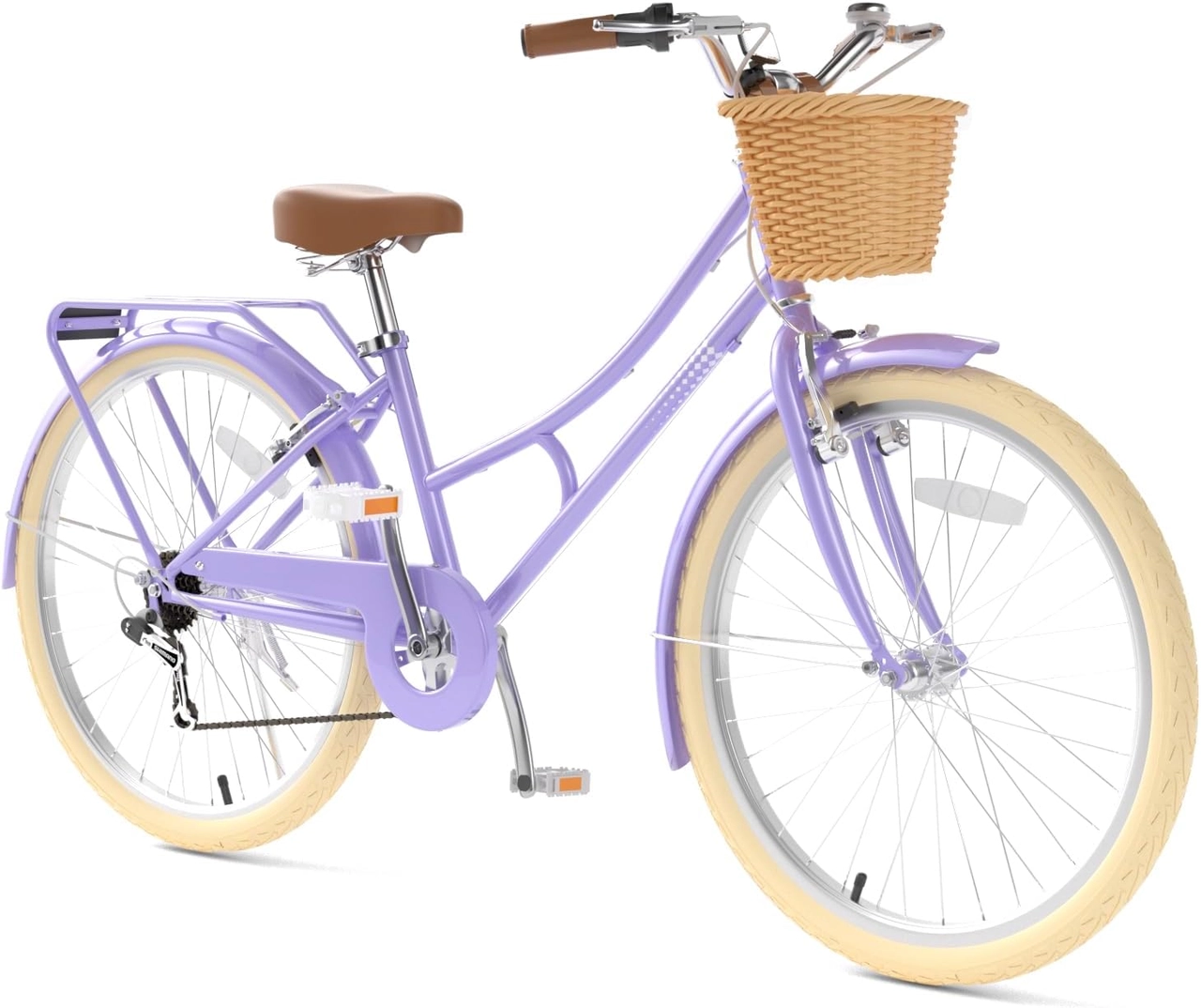 XJD Beach Cruiser Bike with V-Brake – Purple, 26-Inch
This beach cruiser includes a purple 26-inch option, along with listed mint green and pink choices in 20, 24, and 26 inches. Its 26-inch versions are relevant only after individual fit checks.
XJD Beach Cruiser Bike with Rear Rack & V-Brake – Pink is listed in 20-inch, 24-inch, and 26-inch options. It may help a rider near the overlapping 24- and 26-inch height ranges compare two sizes within the same catalog model.
XJD Beach Cruiser Bike with V-Brake – Purple, 26-Inch has listed 20-, 24-, and 26-inch options in mint green and pink, plus a purple 26-inch option. The purple choice is relevant only after the rider has passed the complete 26-inch fit check; its catalog title is not independent fit evidence.
Know when not to choose 26 inches
Do not choose a 26-inch bike if the rider is 60 in (153 cm) or shorter based on this starting standard, cannot stand over the bicycle comfortably, must stretch to steer, cannot reliably operate the brakes, or loses confidence during basic handling. Do not size up simply to extend the time before another purchase.
If the rider is within the 24-inch starting range, compare a correctly fitted 24-inch bicycle rather than assuming 26 inches is close enough. If neither size permits stable control, pause the purchase and have a qualified bicycle mechanic assess fit.
Complete the decision safely
Once fit is confirmed, follow the exact product manual for assembly, adjustments, maintenance, compatibility, load limits, and torque requirements. Use a qualified bicycle mechanic whenever the instructions are unclear or the bicycle cannot be adjusted to the rider without exceeding the manual’s limits.
Add a properly fitting bicycle helmet. U.S. Consumer Product Safety Commission guidance says it should sit level and its straps should be used according to the helmet manufacturer’s instructions.
Before buying a 26-inch bike, write down the rider’s height and inseam, test stand-over and reach, verify confident brake operation, and choose 26 inches only when all four checks support it.
Bikes for your next adventure
XJD Beach Cruiser Bike with V-Brake – Purple, 26-Inch
XJD Beach Cruiser Bike with V-Brake – Purple, 26-Inch brings the recorded fit, r…$218.49
$229.99
XJD Beach Cruiser Bike with U-Brake – Green, 24-Inch
XJD Beach Cruiser Bike with U-Brake – Green, 24-Inch brings the recorded fit, ri…$159.99
$199.99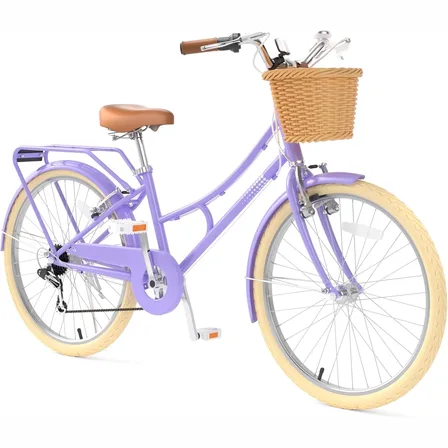
XJD Beach Cruiser Bike with U-Brake – Purple, 24-Inch
XJD Beach Cruiser Bike with U-Brake – Purple, 24-Inch brings the recorded fit, r…$159.99