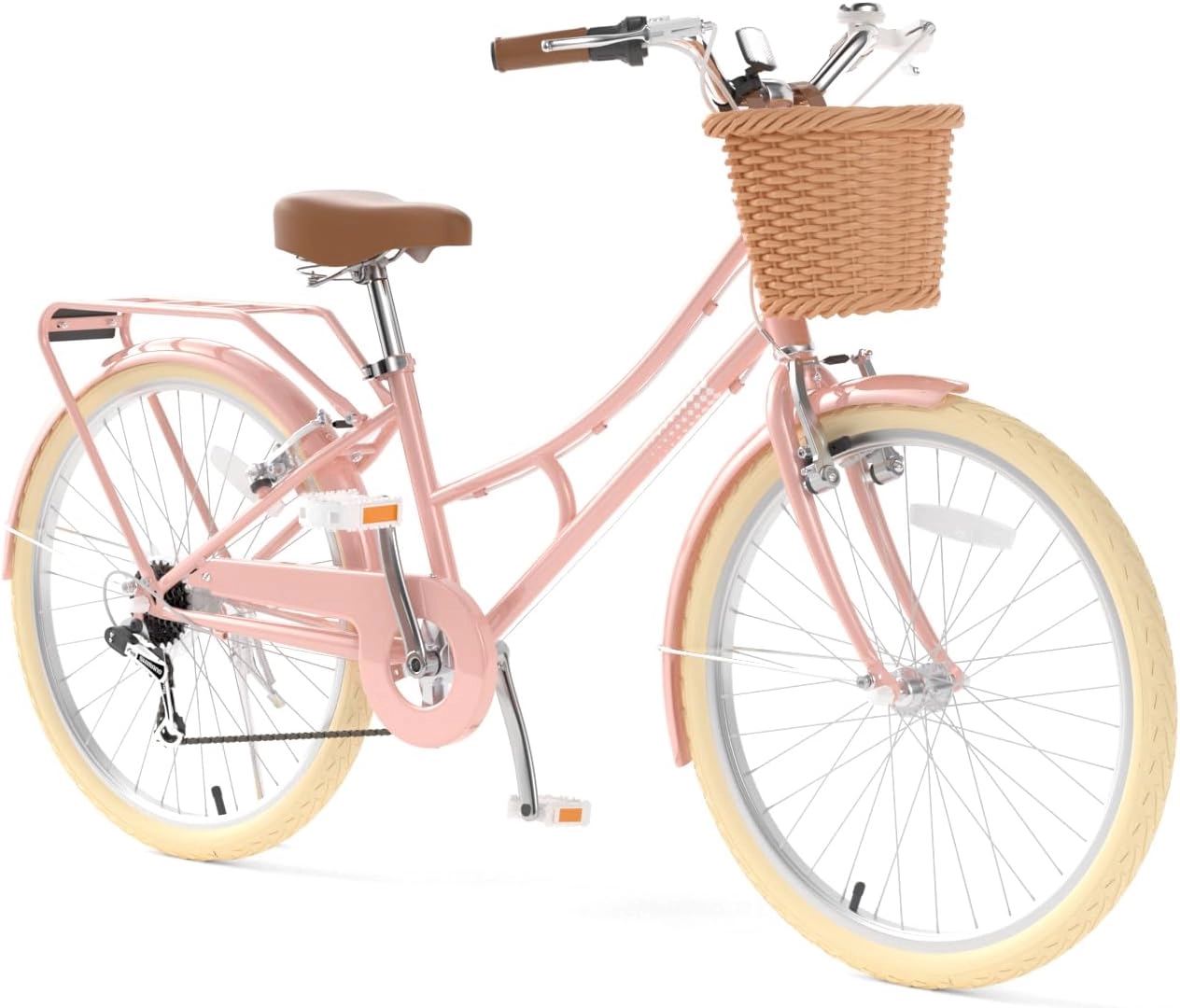
Kids' Bike Buying Guide: What to Look For at Every Size (12–26 Inch)
Buying a kids' bike should be exciting — and it is, right up until you stand in front of a wall of sizes and realize "12 inch," "16 inch" and "20 inch" don't refer to the bike at all, but to the wheels. Suddenly you're guessing about inseams, training wheels, coaster brakes and gears, all while a four-year-old tugs your sleeve. This guide walks through exactly what to look for at every wheel size from 12 to 26 inch, so you can match the bike to the rider — not to the age printed on the box.

Here's the short version before we go size by size: two measurements matter more than anything else. Measure your child's height and their inseam (inner leg length, from floor to crotch in shoes), then match the inseam to the bike's minimum seat height. A child who can plant both feet flat while sitting on the saddle — with the seat at its lowest setting — is on a bike they can control. For the full measuring walkthrough, see our companion piece on kids' bike sizing by height and inseam; if you prefer a condensed decision flow first, the parent's step-by-step guide to choosing a kids' bike boils the whole process down to three checks.
The One Rule That Beats Everything: Fit the Rider, Not the Age
Age ranges on bike boxes are averages, and kids are not averages. A tall three-year-old may be safer on a 14 inch bike than a 12; a small six-year-old may still belong on a 16. The test that never lies is standover clearance: have your child straddle the top tube with both heels on the ground. You want one to two inches of daylight between the tube and their body. More than that and the bike is too small; less, and it's too big to hop off safely when things go wobbly.
The second test is seat range. If the saddle at its lowest point still leaves your child on tiptoes, the bike is too big no matter what the sticker says — and an oversized bike is the single most common reason a child refuses to ride. For a deeper look at what happens after the fit is right, our article on the health benefits of cycling for kids is worth a read.
Kids' Bike Size Chart: 12 to 26 Inch
| Wheel size | Typical age | Rider height | Inseam | What usually changes at this size |
|---|---|---|---|---|
| 12 inch | 3–4 yrs | 34–40 in | 14–17 in | First pedal bike; training wheels and coaster brake standard |
| 14 inch | 3–5 yrs | 37–45 in | 16–20 in | Same simple layout as a 12, with more growing room |
| 16 inch | 4–7 yrs | 40–48 in | 18–22 in | Hand brakes appear alongside the coaster brake; longer rides |
| 20 inch | 7–12 yrs | 48–60 in | 22–26 in | Gears enter the picture; BMX and mountain styles split off |
| 24 inch | 10–14 yrs | 54–64 in | 26–31 in | Near-adult components, real trails, school commutes |
| 26 inch | Teen–adult | 60+ in | 29+ in | Adult-standard wheels and full-size frames |
The overlap between rows is intentional. Height and inseam decide the size; the age column is only a starting guess. When your child falls between two sizes, the smaller bike is almost always the better teacher.
12 Inch Bikes: The First Pedal Bike
Most riders meet a 12 inch bike between ages three and four. The priorities here are a low standover height, a backward-pedal coaster brake that a preschooler can't fumble, and — above all — light weight. A bike that weighs nearly as much as its rider cannot be steered out of trouble, picked up off the ground, or started on a slope. Compare the listed weight before anything else, and favor full pneumatic (air-filled) tires over solid plastic ones; the ride quality and grip difference on a driveway is dramatic.

At this stage, choose function over features: a chain guard that keeps shoelaces and pant legs out of the drivetrain, a handlebar the child can reach without stretching, and training wheels that can be removed later. Our XJD girls' bike with training wheels and basket is a typical example of the layout done right, and you can browse the full range in the 12 inch kids' bikes collection.
14 Inch Bikes: Growing Room Without New Complexity
The 14 inch wheel size is the quiet overachiever of the lineup. It keeps the single-speed, coaster-brake simplicity of a 12 but stretches the frame for taller preschoolers and kindergartners — often the difference between one season of use and two or three. If your child is nudging the top of the 12 inch height range but isn't ready for hand brakes, a 14 is the natural move rather than a leap to a 16.

Check the same basics as the 12: weight, standover, chain guard, and training wheels that pop off without tools when balance day arrives. See what's available in the 14 inch kids' bikes collection, or narrow by style in girls' bikes and boys' bikes.
16 Inch Bikes: Where Confidence Takes Off
Somewhere between ages four and seven, most kids do their most important cycling work on a 16 inch bike: this is where training wheels typically come off and real balance begins. Because braking transitions too, look for a model that pairs the coaster brake with a front hand brake — sized so a small hand can actually wrap the lever and pull it to the bar. Practice the hand brake on grass before the training wheels come off and the transition tends to be smooth rather than scary.

Baskets, bells and doll seats all get serious use at this age, and they're more than decoration — a basket that carries their own water bottle gives kids a reason to choose the bike. Browse the 16 inch kids' bikes collection or see training wheel bikes if the wobble phase is still ahead.
20 Inch Bikes: Gears, Hand Brakes and Real Riding
The 20 inch size is where kids' bikes stop being toys and start being transportation — and where the styles split apart. A neighborhood rider on flat sidewalks is genuinely well served by a simple single-speed with two hand brakes; fewer moving parts means less maintenance and nothing to fumble mid-intersection. Riders facing hills, dirt paths or school commutes will get more out of a 6- or 7-speed with a grip shifter, which is easier for small hands than a trigger shifter.

Whatever the style, verify brake lever reach before buying: your child should pull both levers to the handlebar with two fingers while gripping the grips. BMX-minded riders should see our XJD BMX bike with training wheels and the rest of the kids' BMX collection; everyone else can start with the 20 inch kids' bikes collection.
24 Inch Bikes: Big-Kid Capability
A 24 inch bike carries riders from roughly age ten through fourteen with near-adult components — think 7- and 8-speed drivetrains, front suspension on mountain models, and powerful linear-pull brakes. Fit checks matter as much as ever, but now include reach to the bars and shifter, not just standover. This is also the size where style preference becomes a real decision: a comfort cruiser with an upright posture for neighborhood and boardwalk riding, or a mountain bike for trails.

Our XJD 24 inch cruiser with basket and rack shows how refined this category has become, and the full lineup is in the 24 inch youth bikes collection. Trail riders should also compare options in kids' mountain bikes.
26 Inch Bikes: The Last Size You'll Ever Buy Them
Twenty-six inches is the adult standard — which makes a 26 inch bike the bridge between youth cycling and grown-up riding, and often the bike a teenager and a parent can actually share. At this size, shop by frame geometry and intended use rather than wheel diameter alone: a step-through beach cruiser with a spring saddle suits boardwalks and grocery runs, while a hardtail mountain bike suits singletrack.

Our XJD 26 inch cruiser in purple and the rest of the 26 inch youth and adult bikes collection make good starting points, with more laid-back options under beach cruisers.
The Buying Checklist: Seven Things to Inspect Before You Pay
- Weight. A good rule of thumb: the bike should weigh no more than about 40 percent of the rider. Lighter frames and components cost a little more and repay you every time the bike (or the child) ends up on the ground.
- Brakes. Under five, a coaster brake plus one hand brake is plenty. From a 20 inch bike up, dual hand brakes with adjustable-reach levers are the standard — and reach that fits today beats features that impress adults.
- Drivetrain. Single-speed keeps things simple until confidence is solid; introduce gears at 20 inches and up, ideally with a grip shifter. More speeds are not an upgrade if the rider can't use them.
- Tires and wheels. Air-filled tires grip and roll dramatically better than solid ones. Check that wheels spin true and quick-release or bolted axles are tight.
- Geometry and standover. One to two inches of standover clearance, a saddle that drops to today's inseam (not next year's), and bars the child can reach with a slight bend in the elbows.
- Adjustability. A long seatpost range and a handlebar that can rise with the rider stretch a well-chosen bike across two full growing seasons.
- Safety certification and assembly. In the US, kids' bikes must meet the CPSC bicycle standard (16 CFR Part 1512). Buy from a seller that ships the bike fully assembled and tuned, or budget a shop tune-up after box-store assembly.
Five Mistakes to Avoid
- Sizing up to "grow into it." An oversized bike brakes late, corners badly and shatters confidence. Buy the bike that fits today, with an inch or two of seatpost growth in reserve — no more.
- Shopping by age label. The chart above exists because age and height diverge constantly. Inseam is the tiebreaker.
- Choosing the heaviest bike because it's cheapest. Weight is the feature a small rider feels on every single pedal stroke.
- Spending the whole budget on the bike. A properly fitted helmet is not optional equipment; our kids' helmet sizing guide takes two minutes to apply.
- Skipping the brake-reach check. Levers the rider can't reach are the most common safety miss on new bikes — and the easiest to fix before purchase.
Frequently Asked Questions
Should I buy a size up so the bike lasts longer?
Generally, no. A bike that's too big handles poorly and slows down learning, which costs you more seasons than it saves dollars. One growth season of seatpost range is plenty; two is the sensible maximum.
What's the difference between a balance bike and a 12 inch pedal bike?
A balance bike has no pedals — children push with their feet and learn glide-and-balance first, which is why balance-bike graduates often skip training wheels entirely. A 12 inch pedal bike adds the drivetrain and a coaster brake. Either can be the right first bike; balance bikes suit ages 18 months to 4, while a 12 inch pedal bike suits children who already coast confidently or prefer the classic route with training wheels.
When should training wheels come off?
Usually during the 16 inch stage, between ages four and six — earlier for balance-bike graduates. The signs are consistent: the child coasts with the training wheels barely touching, steers by lean rather than by bar-twist, and asks to have them off. Lower the seat, find a grassy slight downhill, and expect a rider within an hour.
Do 20 inch bikes need gears?
Not necessarily. On flat sidewalks a single-speed 20 is simpler and lighter, which most kids in that range prefer. Add a 6- or 7-speed when hills, longer rides or trail use enter the picture — or when the child is ready to manage one more control.
Can a teenager or an adult ride a 26 inch kids' bike?
Yes — 26 inch wheels are the adult standard. Check the frame geometry and the manufacturer's stated rider height and weight limits rather than the "kids'" label; many 26 inch cruisers comfortably carry riders from early teens through adulthood.
The Bottom Line
Wheel size is where the search starts, but fit is where it ends: inseam over age, weight over gadgets, and brake reach over everything. A child on the right-size, right-weight bike learns faster, rides longer and stays safer — and the smiles per mile are not a small part of the math. Measure your rider, pick the size from the chart above, and lean toward the smaller bike when in doubt.
Ready to shop by size? Start with 12 inch, 14 inch, 16 inch, 20 inch, 24 inch or 26 inch bikes — and pair the new ride with our pre-ride safety checklist so every rollout starts right.