

Youth & Adult Bikes Height and Age Guide: Measure Before You Buy
Measure the rider’s standing height and cycling inseam first, then verify stand-over clearance, reach, brake control and confidence on the actual bike. Use age only as a starting clue, never as the deciding measurement.
What to measure before choosing a wheel size
Measure without shoes on a hard, level floor. For standing height, have the rider stand straight against a wall and measure from the floor to the top of the head.
For cycling inseam, place a firm, book-like object between the legs to represent a saddle, raise it until comfortably snug, and measure from the floor to its top edge. Keep this measurement available when checking the bicycle’s stand-over space and the adjustment guidance in its exact product manual.
Numbers narrow the search, but they cannot confirm fit by themselves. The rider should try the bicycle whenever possible. Do not choose an oversized bike merely to leave room for growth.
Compare measured height with the XJD starting points
| Wheel size | Age starting point | Rider-height starting point |
|---|---|---|
| 12 Inch | 3–4 | 34–40 in / 86–102 cm |
| 14 Inch | 3–6 | 37–45 in / 94–114 cm |
| 16 Inch | 4–7 | 40–48 in / 102–122 cm |
| 18 Inch | 5–9 | 43–52 in / 109–132 cm |
| 20 Inch | 7–12 | 48–60 in / 122–152 cm |
| 24 Inch | 10–14 | 54–64 in / 137–163 cm |
| 26 Inch | Youth and adults | Over 60 in / 153 cm |
These ranges overlap intentionally because age and height do not produce one automatic answer. Begin with measured height, then compare neighboring sizes in person when the rider falls within an overlap. Inseam, body proportions and control decide which candidate fits.
Perform the individual fit check
Have the rider stand over the bicycle with both feet planted securely. There should be usable clearance rather than pressure from the frame, and the rider should be able to mount and dismount without struggling. Confirm the required clearance against the exact bicycle manual because frame shapes differ.
Next, seat the rider in a normal riding position and check the following:
- Reach: The rider can hold the handlebar without locking the elbows, stretching forward or crowding the knees.
- Steering: The handlebar can be turned while the rider remains balanced and in control.
- Brake access: The rider can reach and operate the fitted controls reliably without shifting the hands into an unstable position.
- Confidence: Starting, stopping and putting a foot down feel controlled rather than intimidating.
If any of these checks fail, do not rely on the age range to justify the size. Compare another appropriate size or ask a qualified bicycle mechanic to assess the fit.
Where the supplied XJD bikes are relevant
The XJD Girls Bike Blue and XJD Girls Bike Purple are Training Wheel Bikes offered in 12 Inch, 14 Inch and 16 Inch SKU labels. They provide direct catalog comparison points only for riders considering those three wheel sizes after measurement; the supplied facts establish no fit difference between the colors.
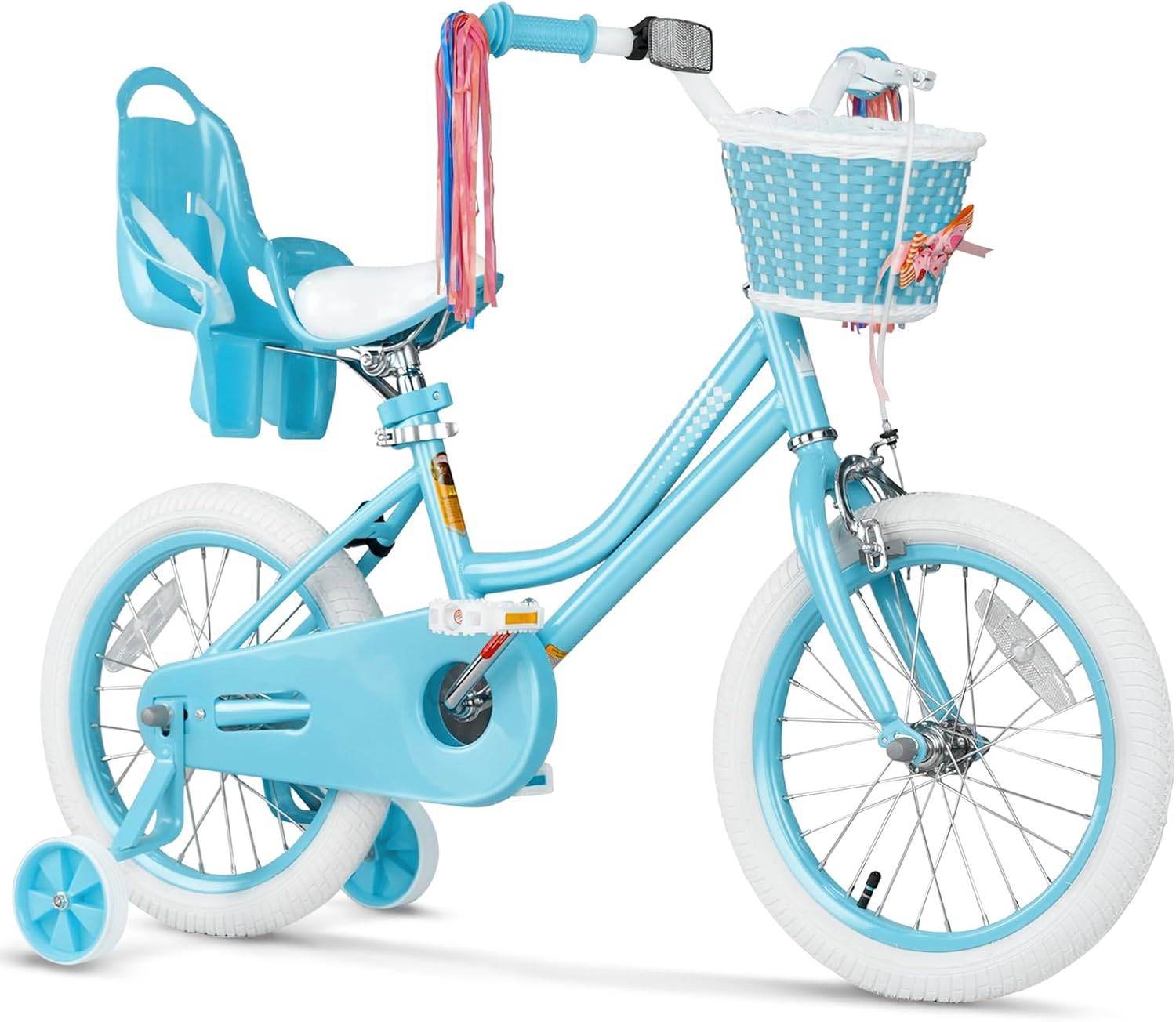 XJD Girls Bike Blue
A Training Wheel Bike offered in 12 Inch, 14 Inch and 16 Inch labels, XJD Girls Bike Blue is relevant only when measurement and an individual fit check point to one of those sizes.
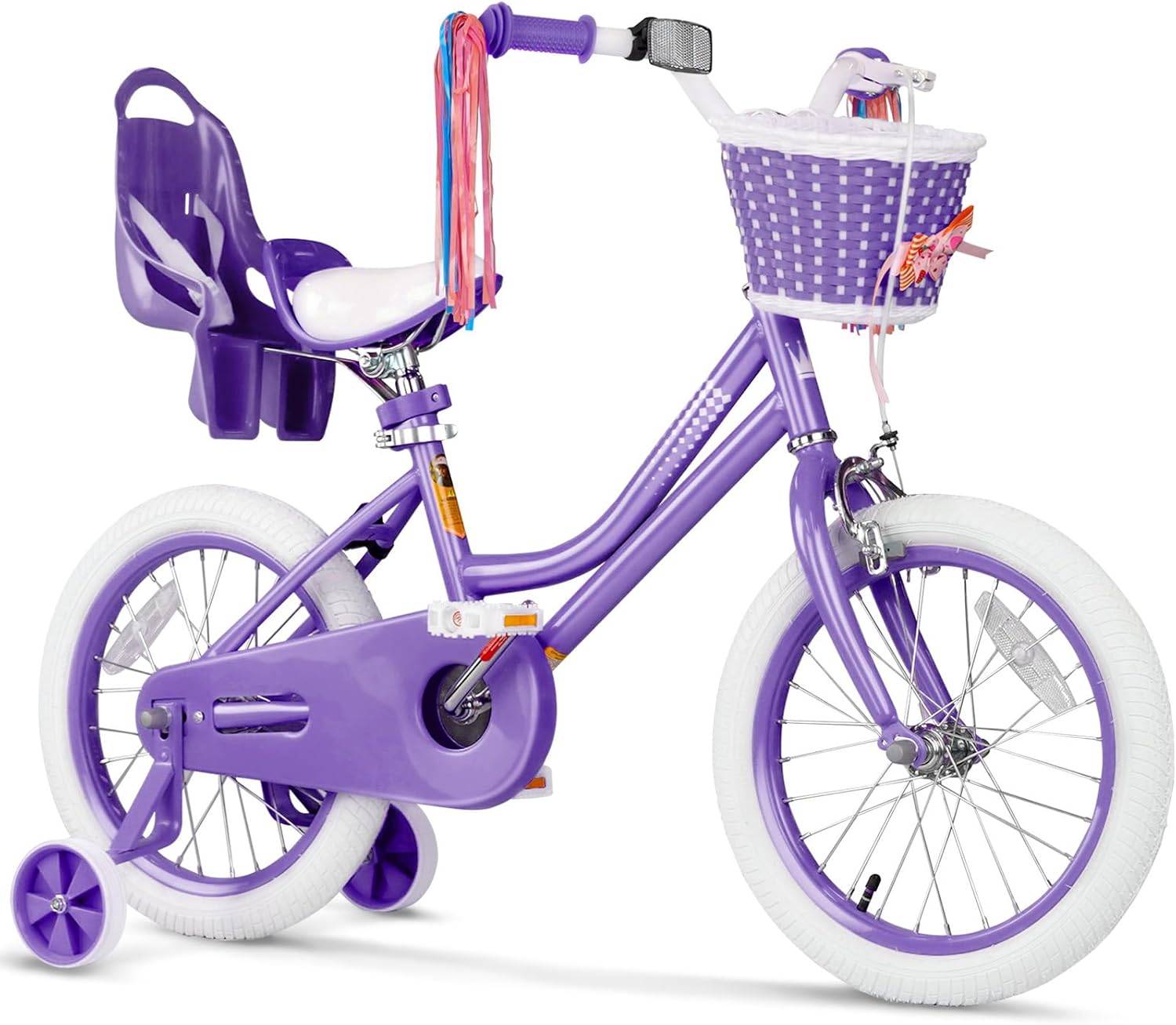 XJD Girls Bike Purple
 is a Training Wheel Bike with 12 Inch, 14 Inch and 16 Inch labels. Use it as a comparison option only after checking rider height, inseam, reach, brake control and confidence.
These products are not substitutes for 18 Inch, 20 Inch, 24 Inch or 26 Inch choices. In particular, they are generally not relevant to an adult-height search because their largest supplied label is 16 Inch, while the XJD starting point for youth and adults over 60 in / 153 cm is 26 Inch. A shorter rider still needs an individual fit check rather than an assumption based on the word “adult.”
Resolve overlaps without guessing
If measured height appears in two rows, test both candidate sizes when available. Choose according to stand-over space, comfortable reach, dependable brake operation and present confidence—not according to which bicycle may last longer.
If the height falls outside a product’s range, remove that size from consideration. If height suggests one size but inseam or reach prevents safe, comfortable control, pause the purchase and obtain an in-person assessment. Never improvise adjustments, compatibility changes or assembly procedures; follow the exact product manual or use a qualified bicycle mechanic.
Complete the pre-purchase decision
- Record standing height and cycling inseam in inches or centimeters.
- Use the table to identify the likely wheel-size row and any overlapping neighbor.
- Try the actual bicycle and confirm stand-over, reach, steering, brake access and confidence.
- Reject an oversized option even if it promises more growing room.
- Check the exact manual for assembly, adjustment, maintenance, compatibility, load limits and torque information.
Finally, add a properly fitting bicycle helmet. It should sit level and its straps should be used according to the helmet manufacturer’s instructions. Buy only when the rider’s measurements and hands-on control agree on the size; if they do not agree, measure again and compare another size.
Bikes for your next adventure
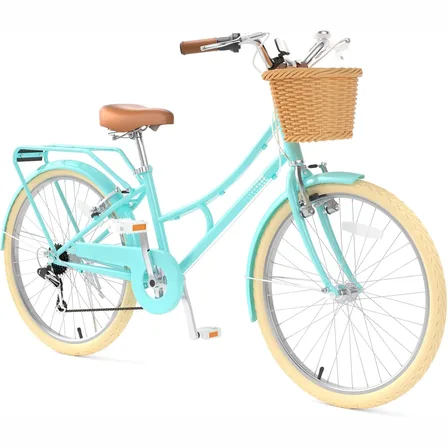
XJD Beach Cruiser Bike with U-Brake – Green, 24-Inch
XJD Beach Cruiser Bike with U-Brake – Green, 24-Inch brings the recorded fit, ri…$159.99
$199.99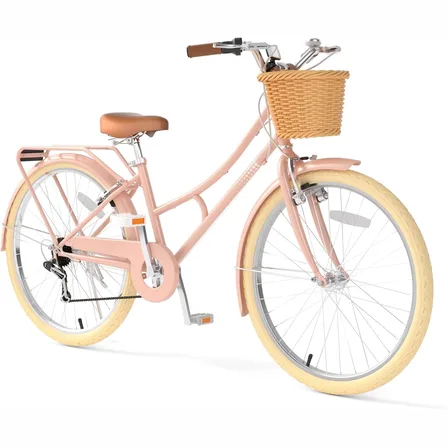
XJD Beach Cruiser Bike with U-Brake – Pink
3 reviews
XJD Beach Cruiser Bike with U-Brake – Pink brings the recorded fit, riding and c…$159.99
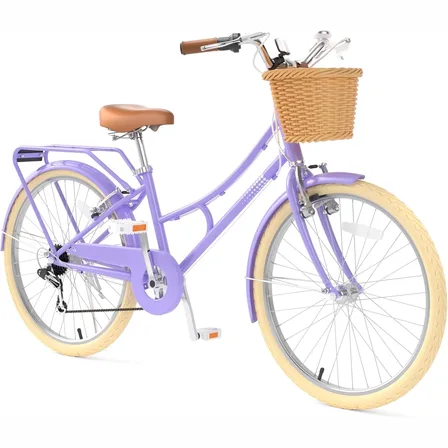
XJD Beach Cruiser Bike with U-Brake – Purple, 24-Inch
XJD Beach Cruiser Bike with U-Brake – Purple, 24-Inch brings the recorded fit, r…$159.99