

Kids Bike Chain Keeps Falling Off: A Parent Checklist
If a kids bike chain keeps falling off, putting it back on is not a complete repair. Excess slack, a stiff link, worn or bent teeth, wheel movement, chainline problems or impact damage can make the symptom repeat. Keep hands clear of pinch points, remove the child and turn the drivetrain only through the safe method described for that bicycle.
Record where and when it leaves
Note whether the chain drops at the front chainring or rear sprocket, inward or outward, and whether it happens during starting, coasting or a bump. This pattern helps a technician identify alignment or tension trouble. Do not reproduce the failure under a child's weight or use a powered tool to spin the crank.
Inspect the complete chain path
With the bike safely supported and the drivetrain still, look for rust, a bent link, a link that does not pivot, damaged rollers and debris. Check the chainring and rear sprocket for bent, missing or unusually shaped teeth. Keep fingers away while another person moves a pedal; one adult should control any slow rotation required by the manual.
Check tension on a single-speed bike
Many children's bicycles use a single-speed chain whose slack is affected by rear-wheel position, but the allowed movement and adjustment method are model-specific. A chain that is too tight can bind or damage bearings, while one that is too loose can derail. Do not slide the rear wheel or guess tension without the exact assembly or service specification.
Check wheel position and chainline
Confirm the rear axle hardware is present and the wheel sits as the instructions show. A shifted wheel can change both chain tension and brake alignment. Look from behind only with the bike stationary to see whether chainring, chain and rear sprocket appear in one plane. Bent parts, axle movement or uncertain alignment belongs with a technician.
Test after qualified correction
After the cause is corrected, an adult turns the crank slowly, checks that the chain passes smoothly and confirms the guard is secure and not rubbing. Test both brakes because rear-wheel work can affect them. Begin with a walking-speed adult check and one short child ride on level ground, stopping immediately if the chain clicks, jumps or tightens.
How current product examples clarify the choice
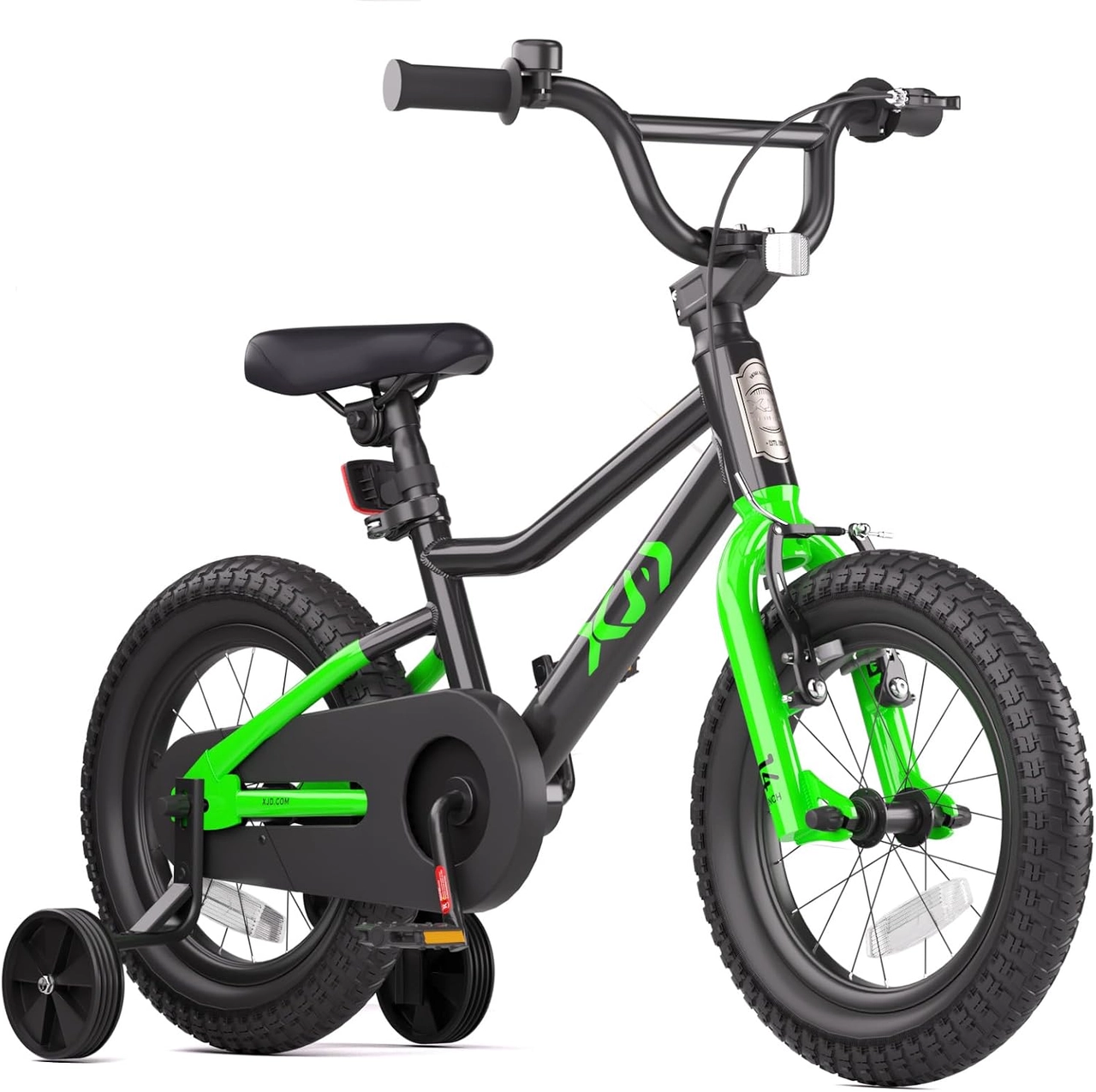
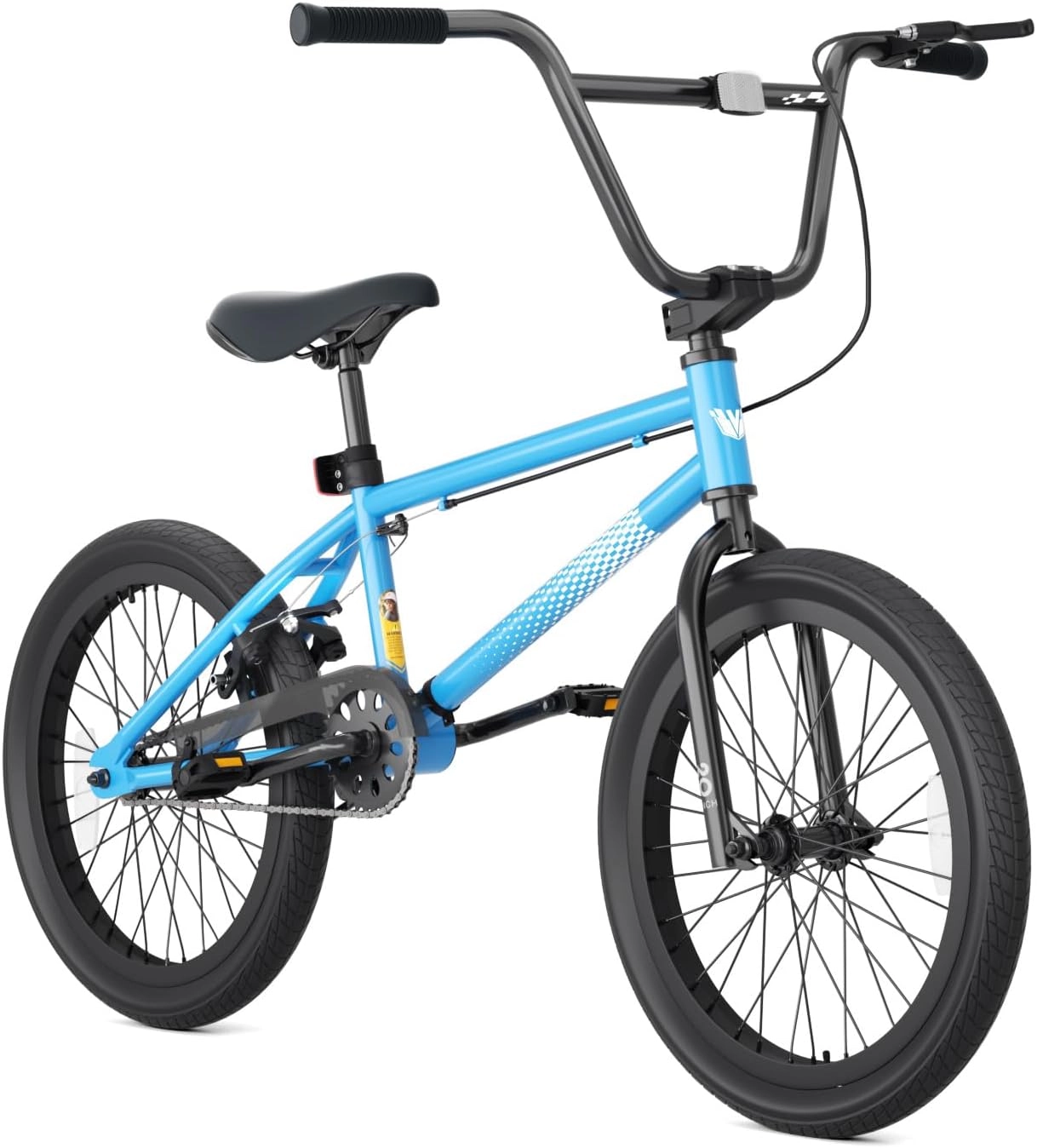
The XJD Black Kids BMX Bike with Training Wheels uses a single-speed drivetrain with an enclosed chain guard, while the XJD Blue 20-Inch Freestyle BMX Bike is also single speed but uses a different frame and wheel setup. These examples make clear that a guard reduces access; it should be removed only by the model's instructions, not pried aside to reach the chain.
Practical checklist
- Do not treat chain replacement as the diagnosis.
- Inspect links, teeth, tension and wheel position.
- Keep fingers away from moving sprockets.
- Recheck the rear brake after wheel-related service.
Frequently asked questions
Can I ride after putting the chain back on?
Not until the reason it came off has been found and the complete drivetrain and rear-wheel setup pass inspection.
Should I make a kids bike chain as tight as possible?
No. Too little slack can bind and damage parts; use the exact model specification or a qualified technician.
Before making the final choice, revisit the exact route or driving area at the time it will normally be used. A setup that works during a quiet test may need more room, visibility or adult support when other people and everyday obstacles are present.
Bottom line
Use the answer to kids bike chain keeps falling off as a decision process, not a shortcut. Confirm the live product data and manual, match the rider to the controls and setting, and favor repeatable control over a larger size or higher performance label.
Bikes for your next adventure
XJD Kids BMX Bike with Training Wheels – Pink Blue
8 reviews
XJD Kids BMX Bike with Training Wheels – Pink Blue brings the recorded fit, ridi…$99.99
$119.99
XJD Kids BMX Bike with Training Wheels – Blue
8 reviews
XJD Kids BMX Bike with Training Wheels – Blue brings the recorded fit, riding an…$99.99
$119.99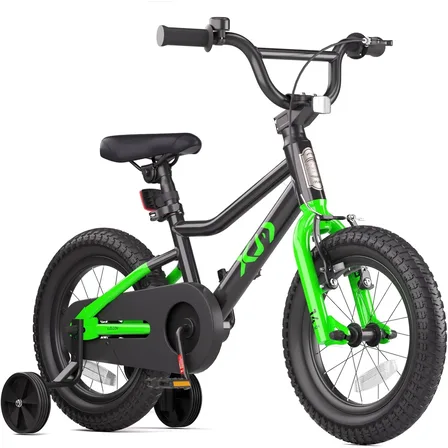
XJD Kids BMX Bike with Training Wheels – Black
XJD Kids BMX Bike with Training Wheels – Black brings the recorded fit, riding a…$99.99
$119.99