

Kids Bike Wheel Wobble: Causes and Safe Checks
A kids bike wheel wobble can describe several different symptoms: the tire may move from side to side, the rim may wander between the brake pads, or the whole wheel may feel loose at the axle. Those clues do not have the same fix. Park the bicycle, keep the child off it and identify what is moving before adjusting any part.
First identify what is wobbling
Place the bicycle on stable support using the method allowed by its manual. Turn one wheel slowly and watch the tire edge, rim and hub separately without putting fingers near spokes or brakes. A molded tire line that rises and falls suggests seating or tire trouble; a rim that moves sideways suggests trueness; movement at the hub or axle calls for immediate service.
Check the tire and inflation
Read the pressure range on the fitted tire and use a gauge rather than a squeeze test. Look for a bulge, torn casing, cracked sidewall, damaged bead or a section that is not seated evenly along the rim. Do not keep inflating a distorted tire. Deflation, reseating or replacement should follow the exact tire and bicycle instructions or be handled by a shop.
Confirm wheel retention without guessing
A wheel must be attached with the exact nuts, washers or quick-release system intended for that model. Compare both sides with the assembly guide and check for missing parts, an open lever or visible axle movement. Do not add washers or tighten by feel when the manual specifies a procedure or torque. Uncertain retention means the bike stays parked.
Look at the rim and spokes
Spin the wheel and compare the rim's distance from the frame or brake pads. One loose, broken or sharply bent spoke can change wheel shape, while a dented rim may not be safely correctable. Do not randomly tighten individual spokes: spoke tension works as a system, and an improvised correction can make the wheel less even or damage the rim.
Know when a technician should take over
Stop home checks if the rim is cracked or dented, spokes are broken, the hub clicks or grinds, the axle moves, or the wheel cannot be centered without rubbing. A bicycle technician can distinguish tire seating, bearing play and wheel truing. After service, an adult should check retention, spin and braking before a low-speed child test.
How current product examples clarify the choice
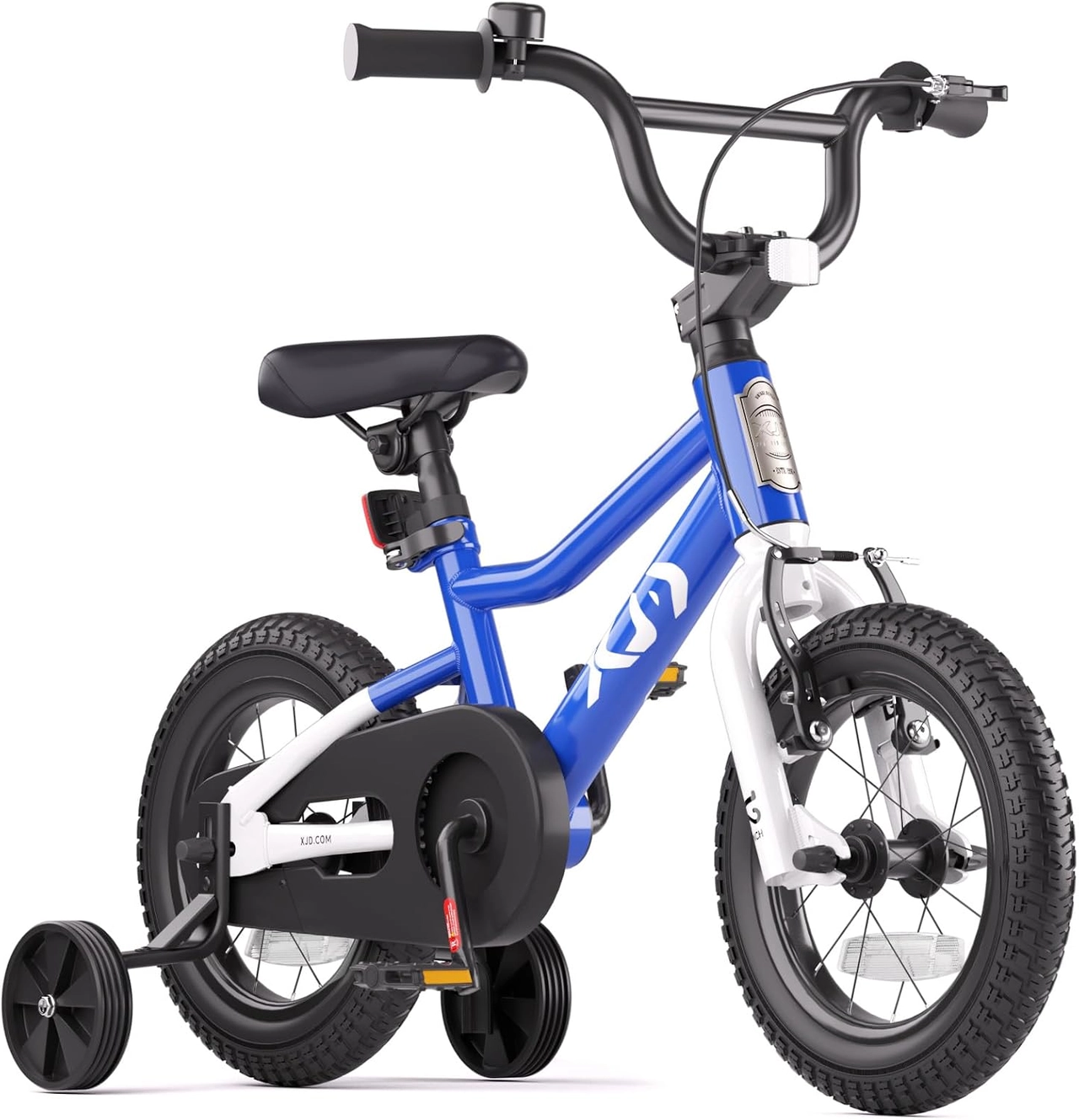
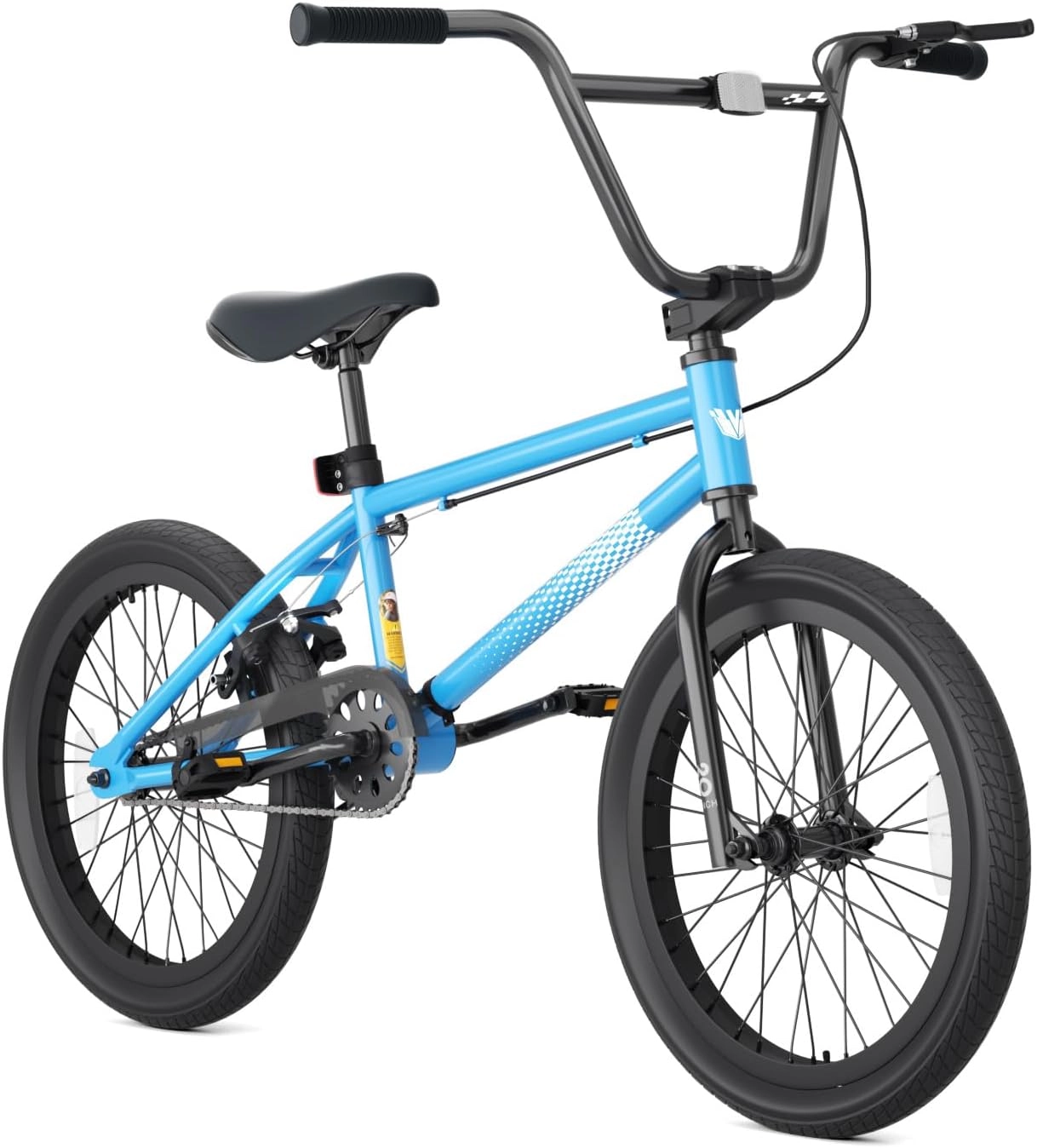
The XJD Blue Kids BMX Bike with Training Wheels uses a small-bike setup with training-wheel brackets and an enclosed chain area, so an adult should distinguish support-wheel alignment from movement in the main wheel. The XJD Blue 20-Inch Freestyle BMX Bike has wide 20 x 2.4-inch tires and U-brakes, making tire seating and rim-to-pad clearance separate checkpoints.
Practical checklist
- Keep the child off a visibly wobbling wheel.
- Watch tire, rim and hub separately.
- Follow the exact wheel-retention instructions.
- Leave spoke tension and damaged rims to a technician.
Frequently asked questions
Can low tire pressure make a kids bike wheel look wobbly?
Yes. A soft or unevenly seated tire can distort, but pressure must remain within the fitted tire's approved range.
Is a small amount of rim movement normal?
Do not judge safety by eye alone. New movement, brake rubbing or a loose hub should be assessed before riding.
Before making the final choice, revisit the exact route or driving area at the time it will normally be used. A setup that works during a quiet test may need more room, visibility or adult support when other people and everyday obstacles are present.
Bottom line
Use the answer to kids bike wheel wobble as a decision process, not a shortcut. Confirm the live product data and manual, match the rider to the controls and setting, and favor repeatable control over a larger size or higher performance label.
Bikes for your next adventure
XJD Kids BMX Bike with Training Wheels – Pink Blue
8 reviews
XJD Kids BMX Bike with Training Wheels – Pink Blue brings the recorded fit, ridi…$99.99
$119.99
XJD Kids BMX Bike with Training Wheels – Blue
8 reviews
XJD Kids BMX Bike with Training Wheels – Blue brings the recorded fit, riding an…$99.99
$119.99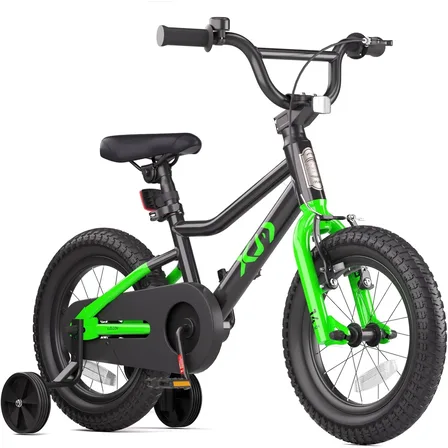
XJD Kids BMX Bike with Training Wheels – Black
XJD Kids BMX Bike with Training Wheels – Black brings the recorded fit, riding a…$99.99
$119.99