How Much Is a Bike? A Practical Cost Guide for Families
A bike costs more than its price tag: budget for the correctly fitted bicycle, a properly fitted helmet, setup, and ongoing maintenance.
What determines how much a bike costs?
For a family, the useful number is the total first-year cost, not simply the bicycle’s advertised price. Begin with the bike, then add any helmet, required assembly or professional setup, immediate fit adjustments, and likely maintenance. Optional accessories belong in a separate line so they do not obscure the essentials.
Price differences only matter after fit and intended use are comparable. A cheaper oversized bike is not good value if the child cannot stand over it comfortably, reach the controls, or stop with confidence. Likewise, paying for features the rider does not need can increase cost without improving the experience.
Measure before comparing prices
Measure the rider’s height and inseam while they are wearing the shoes normally used for riding. Height provides a wheel-size starting point; inseam helps evaluate stand-over clearance. The child should then try the actual bicycle because frame shapes, reach, and control positions can differ even when wheel labels match.
| Wheel size | Starting age | Rider height |
|---|---|---|
| 12 Inch | 3–4 | 34–40 in / 86–102 cm |
| 14 Inch | 3–6 | 37–45 in / 94–114 cm |
| 16 Inch | 4–7 | 40–48 in / 102–122 cm |
| 18 Inch | 5–9 | 43–52 in / 109–132 cm |
| 20 Inch | 7–12 | 48–60 in / 122–152 cm |
| 24 Inch | 10–14 | 54–64 in / 137–163 cm |
| 26 Inch | Youth and adults | Over 60 in / 153 cm |
These ranges are starting points, not proof of fit. Prioritize measured height, inseam, reach, brake control, and current confidence over age alone. Do not buy an oversized bicycle merely to leave room for growth.
Build a realistic family bike budget
Use the same worksheet for every candidate. This prevents a low display price from winning before necessary costs are counted.
- Bicycle: record the current price shown by the seller.
- Helmet: include a bicycle helmet that fits properly, sits level, and uses its straps according to the manufacturer’s instructions.
- Setup: determine whether assembly is included or whether a qualified bicycle mechanic should complete or inspect it.
- Immediate needs: add only necessary fit adjustments and accessories required for the family’s intended riding.
- Upkeep: reserve money for inspection, wear items, and repairs rather than treating maintenance as an unexpected expense.
For assembly steps, maintenance intervals, compatibility, load limits, and torque values, follow the exact product manual or consult a qualified bicycle mechanic. Those details should never be guessed.
Compare value, not unrelated bicycles
Compare candidates with the same suitable wheel size and similar intended use. Check whether each child can stand over the frame, mount and dismount without struggling, hold a steady riding position, turn without excessive reach, operate the brakes, and place a foot down confidently. If one candidate fails those checks, remove it before comparing cost.
Then compare each complete total. Ask what is included, what must be purchased separately, whether professional setup is needed, and which costs are essential now. Promotions, inventory, shipping, and warranty terms can change, so verify them on the current product page or with the seller rather than assuming they are part of the deal.
How the supplied 24-inch option helps
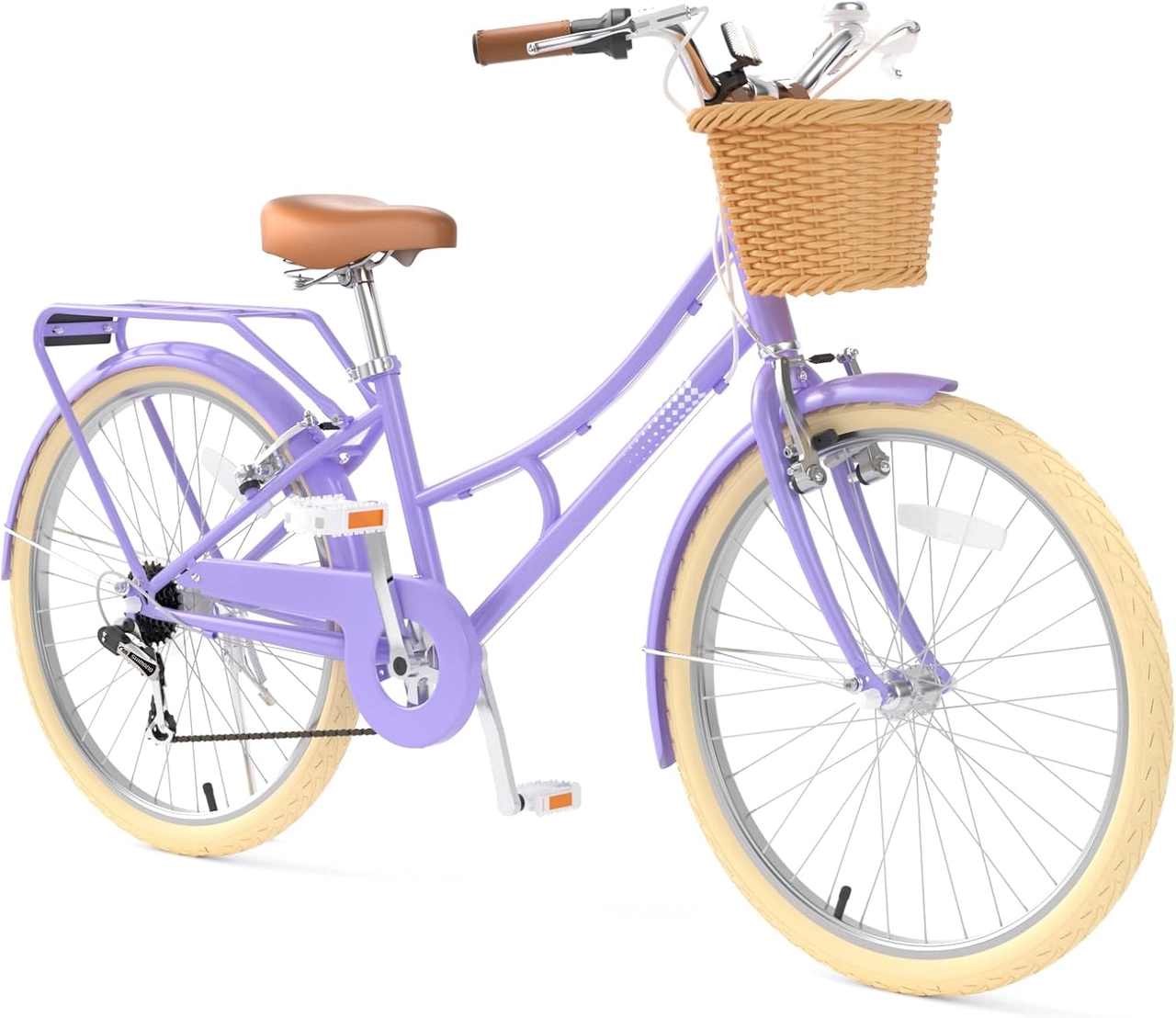
The XJD Beach Cruiser Bike with U-Brake – Purple, 24-Inch is a relevant catalog comparison for a rider whose measurements point toward the 24-inch starting range and whose individual fit check confirms control. Its catalog category is Beach Cruiser Bikes, and its available SKU label is Default. The listing does not establish fit, total cost, or suitability by itself.
This particular catalog option helps make the cost question concrete: use its current displayed price as one line in the family worksheet, then add the same required cost categories used for every other candidate. It is not a substitute for a 12-, 14-, 16-, 18-, 20-, or 26-inch bicycle when the rider needs one of those sizes.
Decide what to do next
First measure height and inseam, identify a starting wheel size from the table, and arrange an individual try-on. Confirm stand-over space, comfortable reach, reliable brake operation, and confident control. Next, total the bike, helmet, setup, necessary accessories, and maintenance allowance for each properly fitting candidate.
Choose only among bicycles that pass the fit check. The practical answer to “How much is a bike?” is the lowest complete cost for a correctly sized bicycle the child can control now—not the smallest price tag or a larger bike intended for later.