Where to Buy Kids Bikes: A Parent’s Online Buying Checklist
Buy a kids bike online from a seller that provides a clear size chart, exact model details, a product manual, and a practical return path if the fit is wrong.
Measure before choosing a store or bike
Record the child’s current height and inseam while they are wearing the shoes they will ride in. Height gives you a wheel-size starting point; inseam helps you judge stand-over clearance. Do not select by age alone or buy an oversized bicycle simply to allow room for growth.
Also note the rider’s confidence and ability to reach forward, steer, and operate the brakes. A size-chart match is not enough if the child feels stretched, cannot control the bicycle comfortably, or cannot reach the brake controls reliably.
Use wheel size as a starting point
| Wheel size | Age starting point | Rider height |
|---|---|---|
| 12 Inch | 3–4 | 34–40 in / 86–102 cm |
| 14 Inch | 3–6 | 37–45 in / 94–114 cm |
| 16 Inch | 4–7 | 40–48 in / 102–122 cm |
| 18 Inch | 5–9 | 43–52 in / 109–132 cm |
| 20 Inch | 7–12 | 48–60 in / 122–152 cm |
| 24 Inch | 10–14 | 54–64 in / 137–163 cm |
| 26 Inch | Youth and adults | Over 60 in / 153 cm |
Overlapping ranges are normal. Prioritize measured height, inseam, reach, brake control, and present confidence over the age column. If a child sits near a boundary, compare both relevant sizes and require an individual fit check rather than automatically choosing the larger one.
Compare online sellers with one checklist
- Fit information: Look for a clearly identified wheel size and enough model information to compare it with the rider’s measurements.
- Exact configuration: Confirm the selected size and color in the SKU or option label, not just in a photograph or page heading.
- Fit-check opportunity: Prefer a buying path that lets the child try the bicycle before final commitment, or provides a workable remedy when the delivered fit is unsuitable.
- Instructions: Make sure the exact product manual will be available. Follow it for assembly, maintenance, compatibility, load limits, and torque information.
- Support: If correct assembly or adjustment is uncertain, plan for help from a qualified bicycle mechanic.
- Helmet readiness: Include a properly fitting bicycle helmet in the purchase plan. It should sit level, with straps used according to the helmet manufacturer’s instructions.
How the supplied XJD options help
The supplied catalog options are useful comparison points for families already considering 20-, 24-, or 26-inch beach cruiser bikes. They do not cover the 12-, 14-, 16-, or 18-inch starting points, so they are not substitutes when the child’s measurements and fit check indicate one of those smaller sizes.
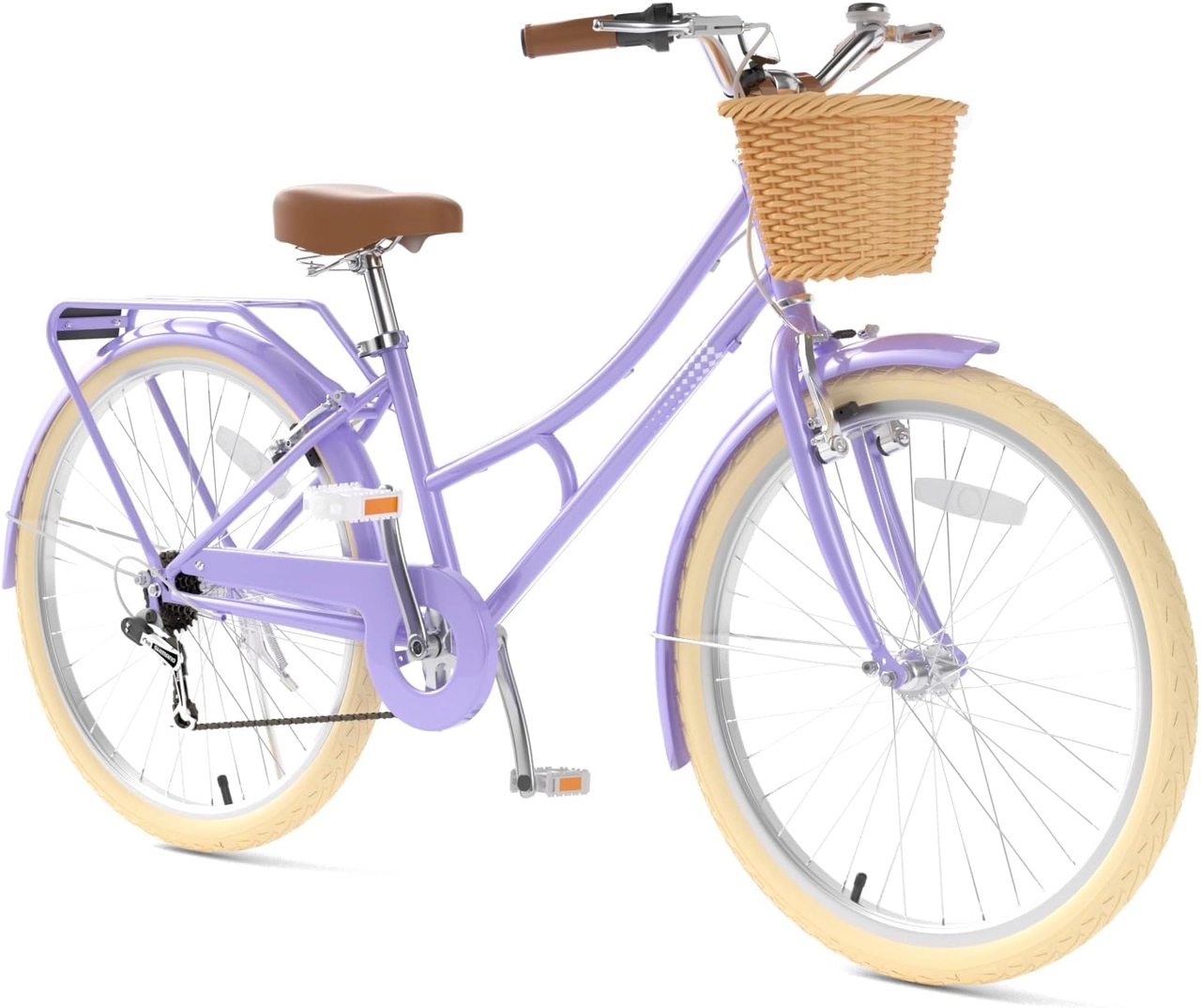 XJD Beach Cruiser Bike with V-Brake – Purple, 26-Inch
Relevant for comparing supplied 20-, 24-, and 26-inch SKU labels in Mint Green, Pink, or Purple, depending on size. Confirm the exact selected label and complete an individual fit check.
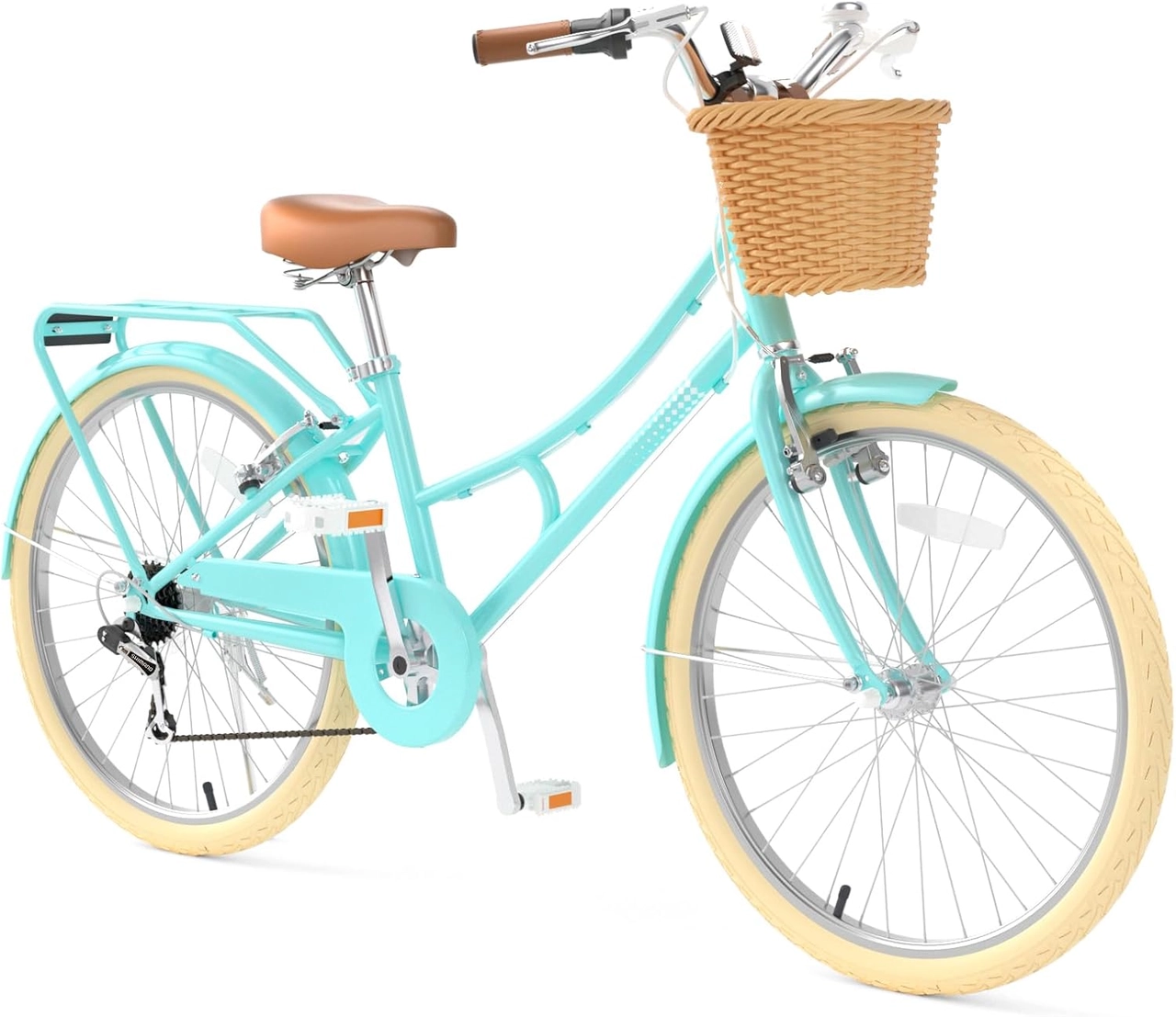 XJD Beach Cruiser Bike with U-Brake – Green, 24-Inch
Relevant when measurements indicate a 24- or 26-inch comparison. Supplied choices are Green / 24 Inch, Pink / 24 Inch, and Pink / 26 Inch; no 20-inch option is listed.
XJD Beach Cruiser Bike with V-Brake – Purple, 26-Inch has catalog options labeled 20 Inch, 24 Inch, and 26 Inch in specified colors. The 20-inch choices are Mint Green and Pink; the 24-inch choices are Mint Green and Pink; the 26-inch choices are Mint Green, Pink, and Purple. This breadth makes the listing relevant when comparing the three larger wheel-size starting points, but each selected SKU still needs to match the intended size.
XJD Beach Cruiser Bike with U-Brake – Green, 24-Inch is offered in catalog labels Green / 24 Inch, Pink / 24 Inch, and Pink / 26 Inch. It is relevant only when the rider’s measurements lead you to compare 24- or 26-inch options. It does not provide a 20-inch option in the supplied catalog facts.
Check the delivered bike before riding
- Verify that the box, bicycle, and order identify the wheel-size option you selected.
- Have the child try the bicycle. Check comfortable stand-over clearance, reach to the handlebar, steering control, and reliable access to the brake controls.
- Reject an oversized fit even if the child may grow into it. Difficulty mounting, balancing, turning, or braking means the size or setup needs reconsideration.
- Use the exact manual for assembly and adjustments. Ask a qualified bicycle mechanic to inspect the bicycle if anything is unclear.
- Fit the helmet level on the head and adjust its straps exactly as its manufacturer directs.
Make the purchase decision
Start with measured height, narrow the search to the corresponding wheel-size range, and compare only exact SKUs in that size. Buy where you can verify the configuration, obtain the manual, and resolve a failed fit check. After delivery, keep the bike only if the child can stand over it, reach it, steer it, and operate its brakes with comfortable control now—not at some hoped-for future height.